In the vast digital playgrounds of gaming, two titans stand as monuments to different visions of the urban experience. On one side lies Los Santos, a sun-drenched, hyper-realistic parody of modern America, frozen in the amber of 2013. On the other, Night City screams from the future—a chrome-plated, neon-drenched dystopia where humanity and machine blur into a single, chaotic pulse. They are worlds apart, separated by decades and design philosophies, yet connected by the boundless imagination of their communities. For the digital alchemist, the player who views game worlds as clay, a tantalizing question arises: what if the familiar streets of Grand Theft Auto V could be infused with the electric soul of Cyberpunk 2077? The answer lies not in official updates, but in the arcane art of modification, where dedicated creators wield code like a painter's brush to redraw reality.
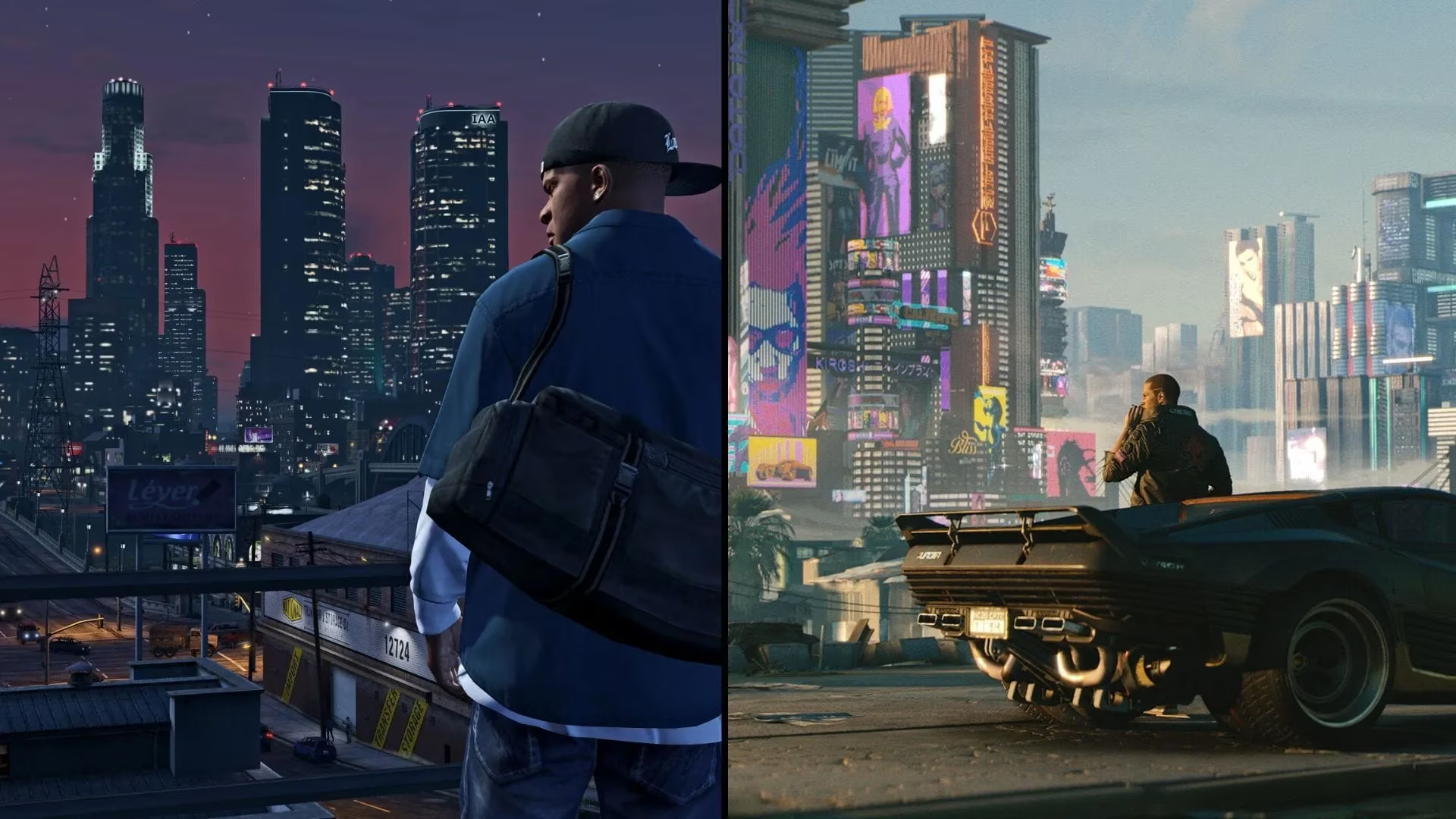
This metamorphosis is a delicate operation, a surgical procedure performed on the digital corpus of the game. It is crucial to understand that this grand illusion is crafted for the Grand Theft Auto V: Legacy Edition—the original PC release. The enhanced version, a separate entity with its own architecture, remains, as of 2026, an untouched canvas for this specific vision. The mods are like specialized keys cut for a specific lock; they will not turn in another. The process begins with foundational tools, the essential chisels and mallets of the modding world: ScripthookV and OpenIV. These are non-negotiable prerequisites, the bedrock upon which the new city will be built. A sacred space must also be prepared within the game's installation directory: a folder named mods, into which the Update folder is ceremoniously copied, creating a safe haven for the new assets to reside without corrupting the original world.
🛠️ The Triad of Transformation
The core of this transfiguration rests on three pivotal modifications, each contributing a vital layer to the final, cohesive illusion.
| Mod Name | Creator | Primary Function | Visual/Sensory Impact |
|---|---|---|---|
| GrandCyberPunk | OlegTemple | Overhauls the game's map and textures. | Transforms districts like Downtown and Textile City into neon-lit cyberpunk sprawls. |
| Quadra V-Tech 2077 | Potato-Mods | Adds the iconic Quadra sports car from Cyberpunk 2077. | Provides the perfect period-accurate vehicle for the new environment. |
| Cyberpunk Theme (Intro + Music) | Zyle | Replaces the game's startup sequence and audio. | Sets the tone from the very first second with Cyberpunk's signature style and soundtrack. |
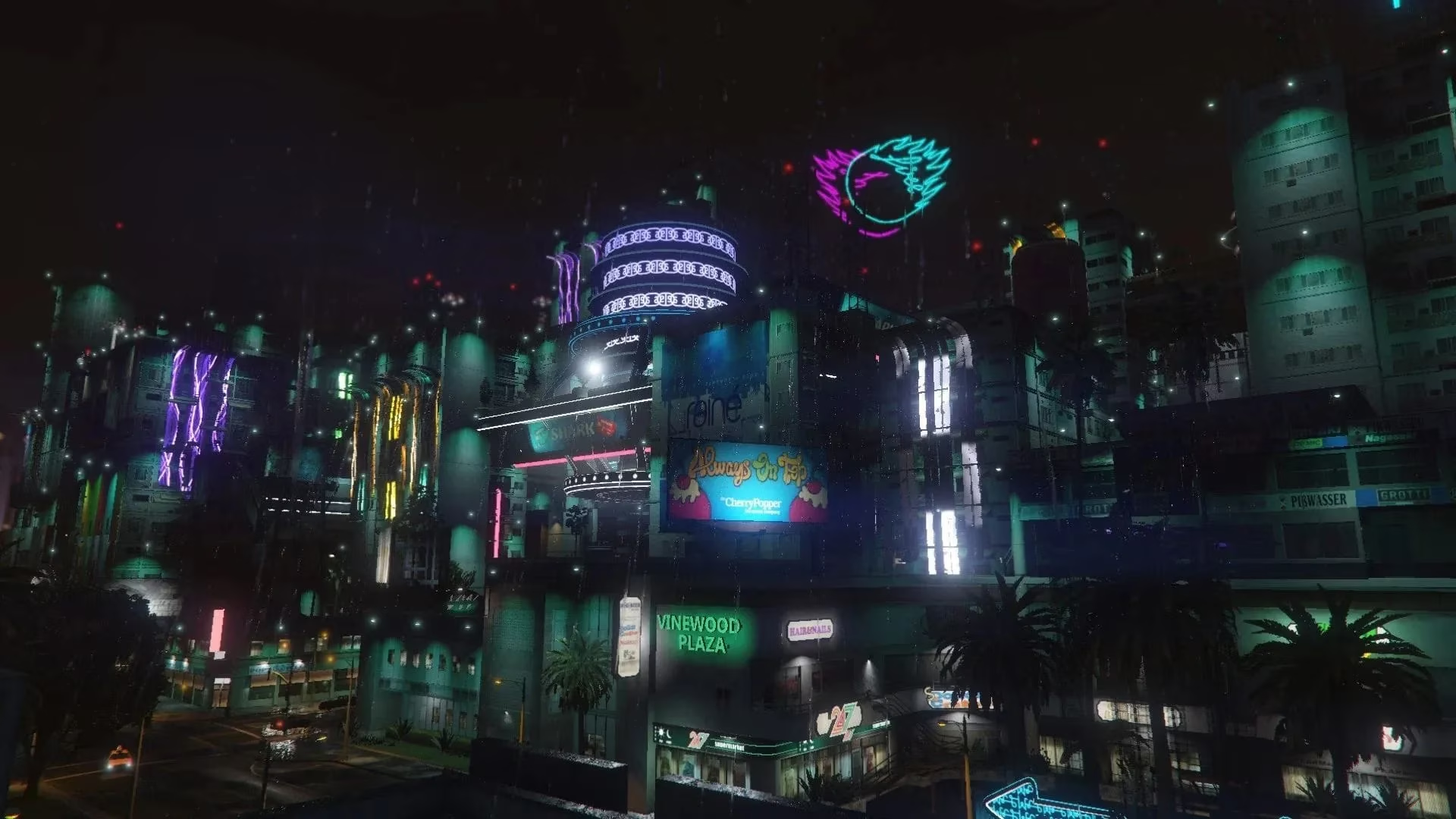
The crown jewel of this endeavor is undeniably the GrandCyberPunk mod. This is not a simple filter or a reshade; it is a comprehensive architectural overhaul. Installing it is like performing a city-wide organ transplant, replacing the warm, Californian hues of Los Santos with the cold, electric palette of Night City. Districts undergo a radical identity shift:
-
Downtown Los Santos sheds its corporate glass for monolithic megastructures adorned with holographic advertisements that bleed light into the smog.
-
Legion Square becomes a bustling plaza where crowds move like data packets through a congested network node.
-
Textile City and Mission Row morph into dense, vertical slums, their fire escapes and crumbling facades now strung with glowing cables and flickering signs in unfamiliar scripts.
The transformation is most potent under the cloak of digital night. When the sun sets, the city awakens in a symphony of light. The mod turns every advertisement board and corporate logo into a radiant beacon, painting the streets in pools of cyan, magenta, and electric yellow. The familiar becomes alien, and the player is no longer a gangster in a modern city, but a denizen in a sprawling tech-noir labyrinth. The ambient noise of traffic and chatter seems to gain a synthetic edge, as if the city itself is whispering in binary.
Yet, a true immersion requires harmony in all elements. Cruising through these neon-canals in a standard GTA vehicle would be a dissonant note. This is where the Quadra V-Tech 2077 mod completes the picture. Adding this sleek, fictional car—a symbol of Cyberpunk 2077's vehicular design—is the final piece of period-accurate wardrobe for the player. Its aggressive lines and glowing accents look as though it was birthed from the very streets the GrandCyberPunk mod creates. Driving it feels less like stealing a car and more like summoning a familiar, a metallic companion forged in the same digital furnace as the city around it.
Finally, the Cyberpunk Theme (Intro + Music) mod attacks the senses at the threshold. It replaces the iconic, whistle-driven GTA V intro with the dystopian title sequence of Cyberpunk 2077. The moment the game launches, the player is greeted not with the sunny cliffs of Los Santos, but with the gritty, fast-cut montage of Night City's promise and despair, all set to the game's pulsating soundtrack. This auditory and visual hijacking is a powerful psychological tool; it rebrands the entire experience before a single button is pressed to move the character. It erases the last lingering memory of the original world, ensuring the player's mindset is fully aligned with the new reality from the very first instant.
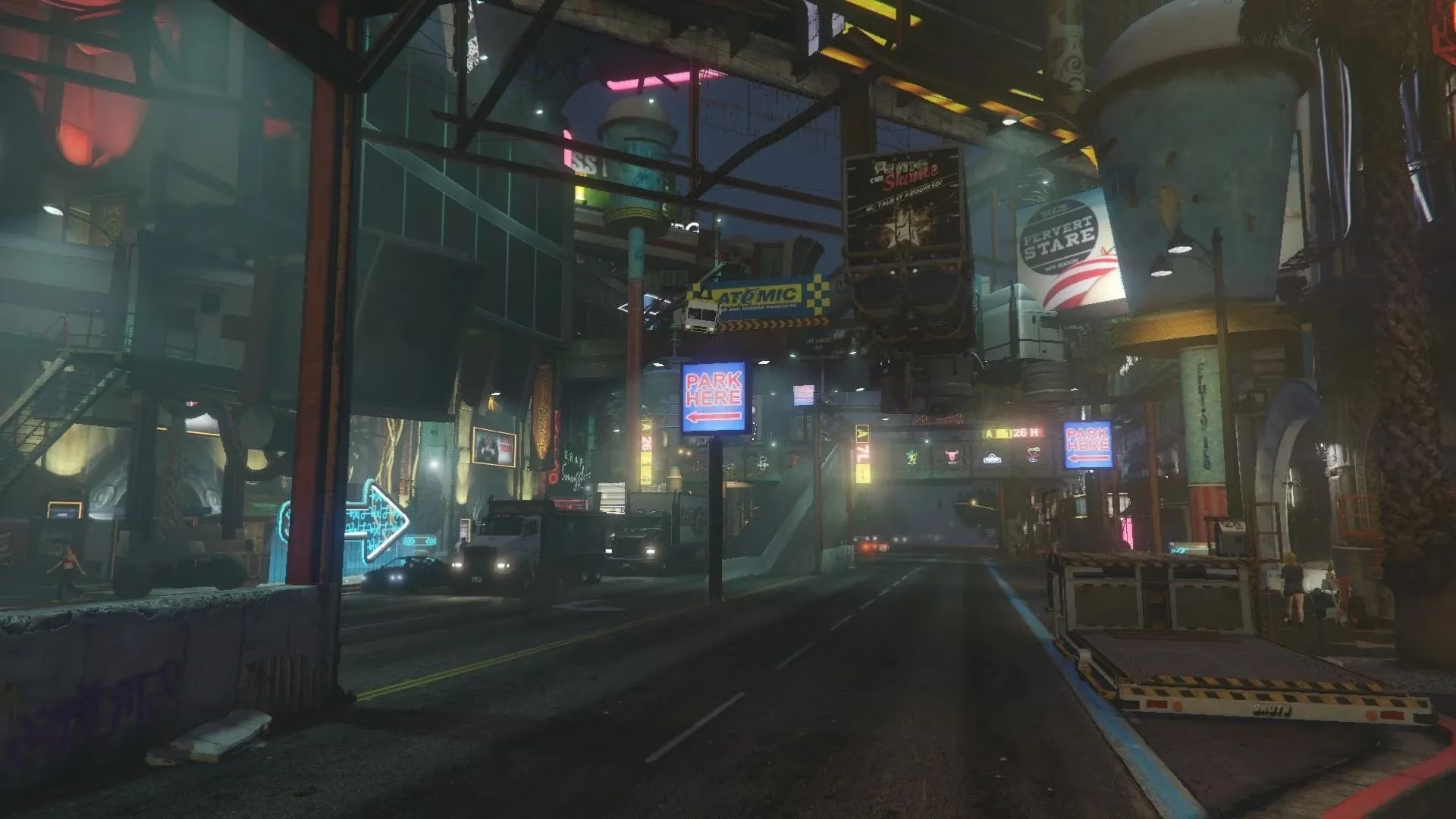
When these three mods function in unison, the effect is nothing short of alchemical. Los Santos is not merely reskinned; it is reincarnated. The gritty, grounded physics of Rockstar's world now serve a completely different aesthetic master. A police chase down the Maze Bank tower plaza feels like a corp-hit gone wrong. A leisurely drive along the Del Perro pier becomes a scene from a melancholic cyberpunk film, the ocean dark and oily under the reflected neon. The modded city becomes a palimpsest, where the ghostly outlines of the original Los Santos are visible beneath the vibrant, dripping glyphs of its new cyberpunk identity—a digital archaeology site of overlapping realities.
This project is a testament to the creative fervor that persists in gaming communities years after a title's release. It is a delicate and entirely unofficial dance, a reminder that these worlds, once shipped, become living entities shaped by their inhabitants. The process is not without its warnings; these are third-party incantations, and their use is a venture into unsanctioned territory, particularly in the guarded realms of online multiplayer. But for the solo explorer, the narrative tourist, it offers a unique voyage. It allows one to walk the same streets as Michael, Franklin, and Trevor, but to see them through the eyes of V, to perceive a story of heists and hubris refracted through a lens of chrome and neon. In this modded convergence, the past and the future of open-world gaming hold a silent, spectacular dialogue under an artificial moon.