It’s 2026, but Night City still holds me like a wolf spider cradling her egg sac—delicately, dangerously. I found myself once again navigating the rain-slicked, neon-drenched streets in Cyberpunk 2077, chasing the phantom of a cure through the Phantom Liberty expansion. By the time the quest “The Killing Moon” loomed on my journal screen, my V was a nerve-racked wire, every dialogue wheel spin a potential snap. The decision to kill Solomon Reed or accept his deal didn’t feel like a simple binary; it felt like a loaded gun pressed to the temple of the entire narrative.
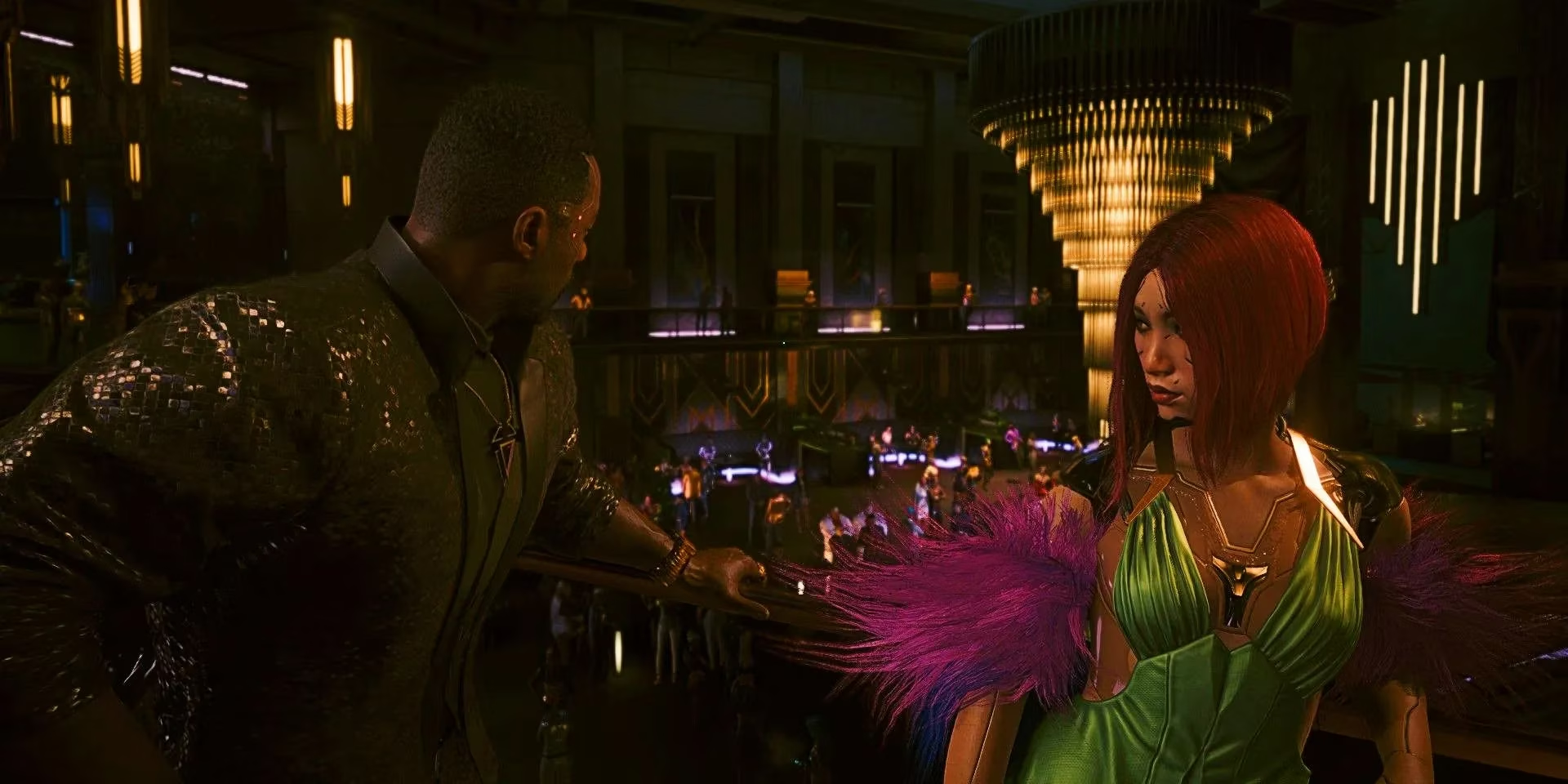
Before this moment, I had sided with Songbird during “Firestarter,” a choice that felt righteous until her lies unspooled like a cassette tape pulled from a fast car window. The neural matrix was never meant for both of us, and her betrayal was a slow acid on the promise of salvation. That revelation turned the ride to the NUSA transport ship into a coffin on rails. I could call Reed and confess my doubt, or I could carry Songbird to the shuttle in silence. The game gave me the prompt “Pick Up Songbird” or “Call Reed,” and I froze—caught between loyalty and self-preservation like a stray code fragment looping forever.
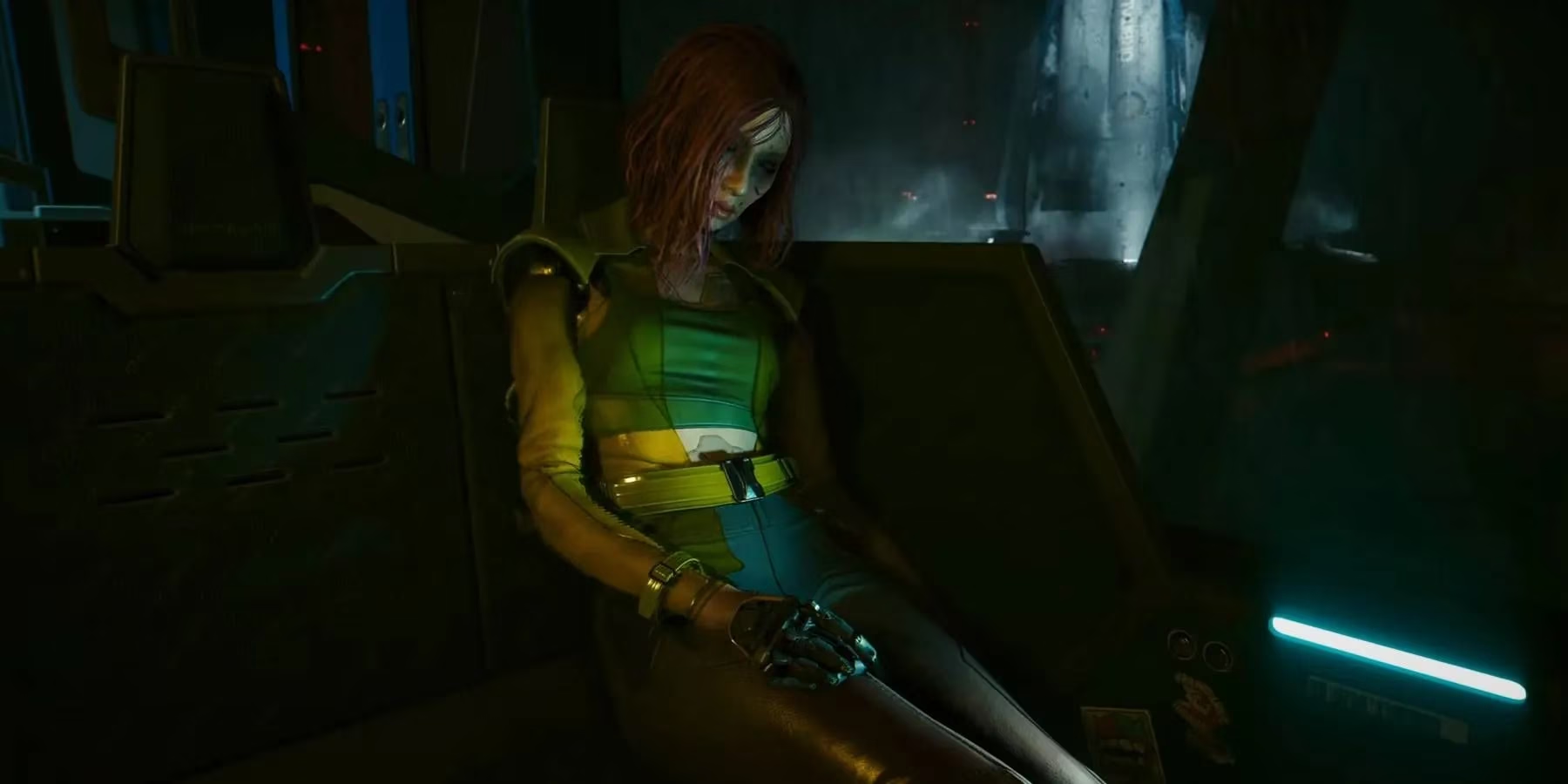
If I chose not to call, I’d still face Reed at the ship’s ramp, his weary gaze a mirror of my exhaustion. But dialing his number felt like dropping a stone into still water; the ripples would become tidal. When I finally made the call, his voice crackled with a strange blend of duty and empathy. He promised to help find the cure, and suddenly the conversation unfolded into a triad of options: strike a deal, give up Songbird but refuse the cure, or refuse everything outright. Each felt like a tarot card drawn blind—The Emperor, The Tower, or The Hanged Man.
The deal option was a seductive trap. Accepting it meant watching Reed strap Songbird into the transport like a malfunctioning piece of hardware. The scene was clinical, almost merciful, but it locked me out of the DLC’s true climax. The cure would come, and V would head to a DC surgery, but the cost was Songbird’s agency and my own access to the “Through Pain To Heaven” mission. I sat there feeling like a gambler who had burned his last poker chip just to avoid seeing his own hand.
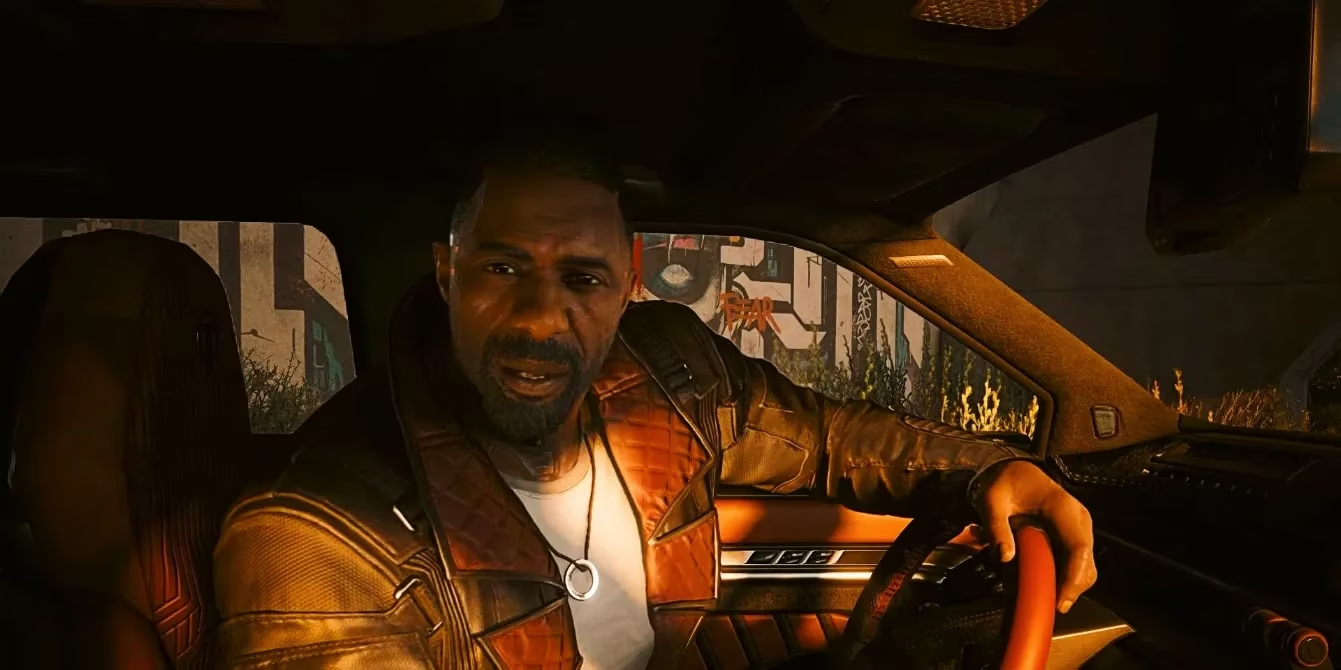
Refusing the deal but still handing Songbird over was a strange middle path—I’d lose the cure, but the story would continue. Yet that path led directly to the “Kill Reed” option. It didn’t appear as a simple “shoot him” prompt; the UI split into “Holster weapon” and “Draw weapon,” a synaptic hesitation that felt like reality cracking. I chose to draw, and the world compressed into a small room of muzzle flashes and regret. Killing Reed wasn’t a victory—it was severing a thread that tied me to the game’s epilogue. With his body on the floor, I could still place Songbird on the ship, but the post-credits mission never sprouted. Instead, Johnny Silverhand appeared, smoke curling from his digital cigarette, and we talked. It was a raw, intimate moment, but it tasted of ashes. The “Through Pain To Heaven” quest remained a ghost, forever locked behind that trigger pull.
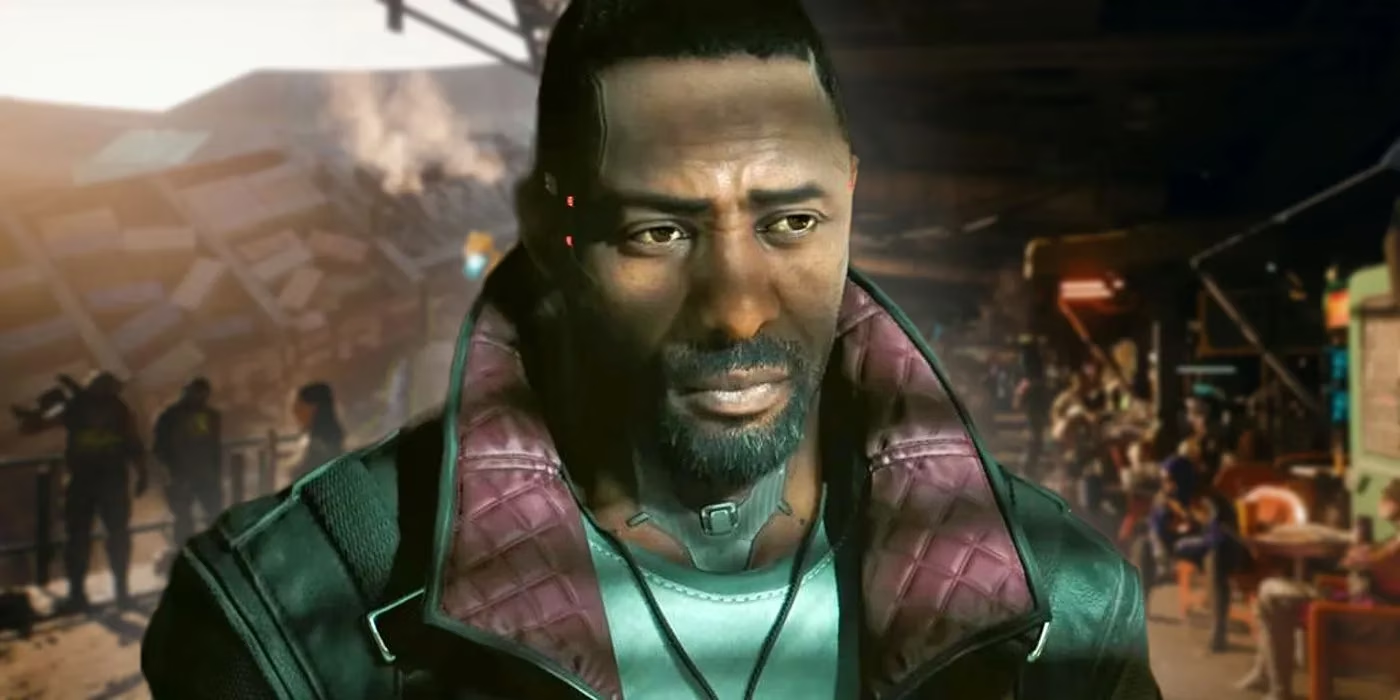
This labyrinth of choices taught me that killing Reed was less a moral act and more an amputation of story branches. Without the epilogue mission, the narrative felt truncated, a symphony cut off mid-crescendo. The deal, on the other hand, offered a semblance of closure—a trip to DC, a ghost of hope—but at the price of Songbird’s freedom. In the end, I’ve replayed this junction three times since 2023, and each time I feel the same ache: Phantom Liberty doesn’t let you win. It offers a maze where every exit is illuminated by the neon glow of compromise. My advice to anyone still wandering these digital streets in 2026 is to avoid the trigger unless you want to see the credits roll without the story’s final heartbeat. Reed is a mirror, and choosing whether to shatter him is choosing whether to shatter the fragile possibility of a richer ending. For me, the true playthrough is letting him live—not out of mercy, but because some games demand we lose to see everything they’ve hidden in the dark.