When Cyberpunk 2077 first launched in late 2020, the internet erupted with clips of flying cars, faceless NPCs, and vendors mysteriously producing food from improbable places. Those viral moments gave the game a "so bad it's good" reputation, drawing laughs even as they exposed a deeply troubled release. Yet as we move through 2026, more than three years after the Phantom Liberty expansion and the transformative 2.0 update, the laughter has largely faded. What remains is a quieter, more frustrating reality: a slew of persistent, gameplay-halting glitches that continue to plague the neon streets of Night City, particularly for those who dare to explore beyond the main story.
Phantom Liberty was widely praised for polishing the core experience—and indeed, the main questline feels robust and largely bug-free. The spy-thriller narrative involving Solomon Reed and Songbird unfolds with cinematic flair, and the new district of Dogtown is a densely packed vertical playground. But step off the beaten path, and the cracks become impossible to ignore. The expansion and countless patches have eliminated the spectacular, shareable chaos of the early days, but they have left behind a graveyard of smaller, systemic issues that sabotage immersion and completionist runs alike.
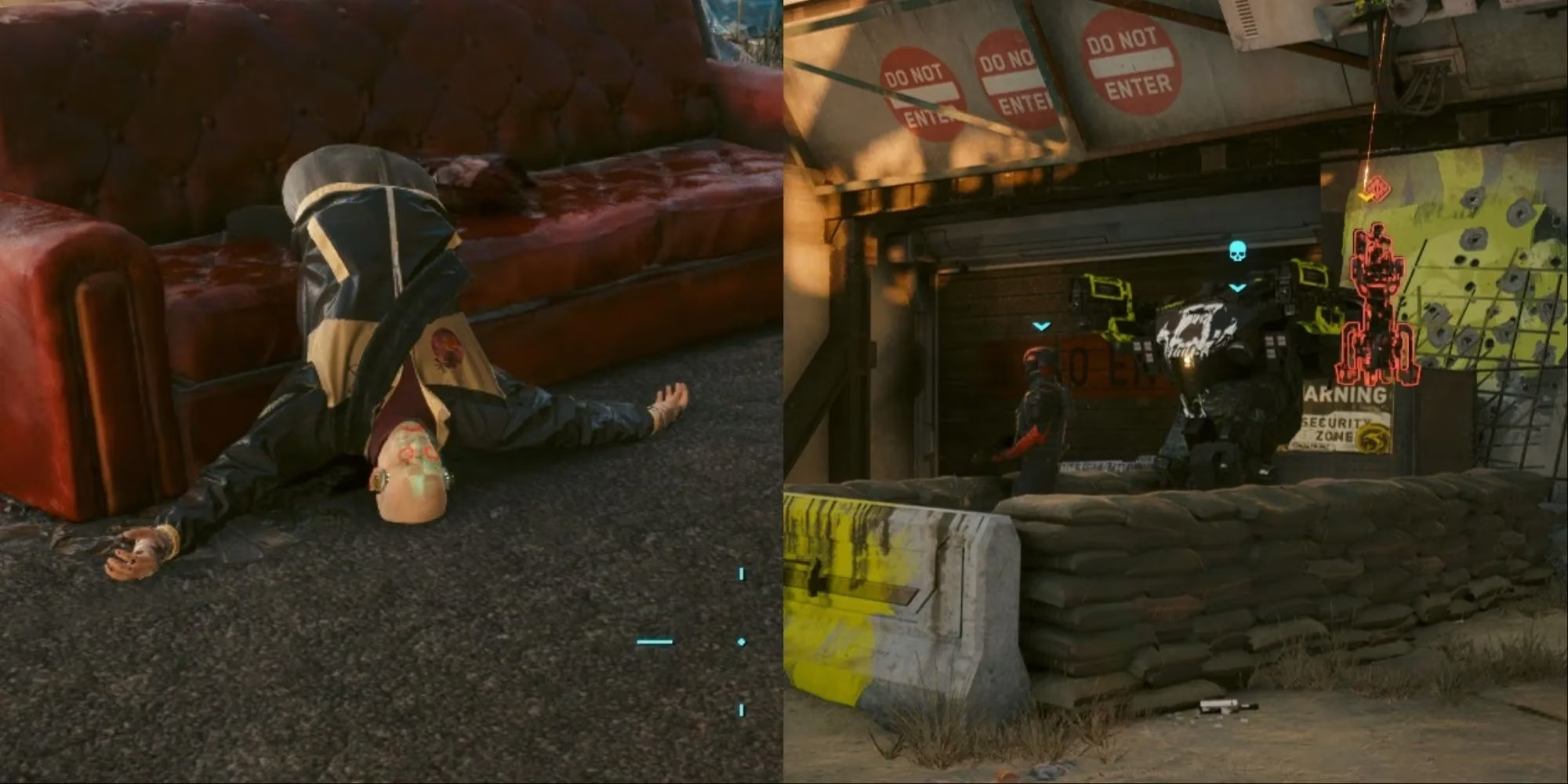
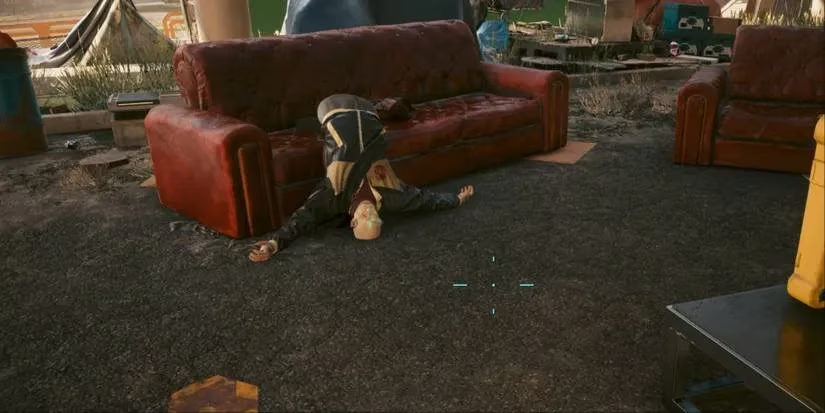
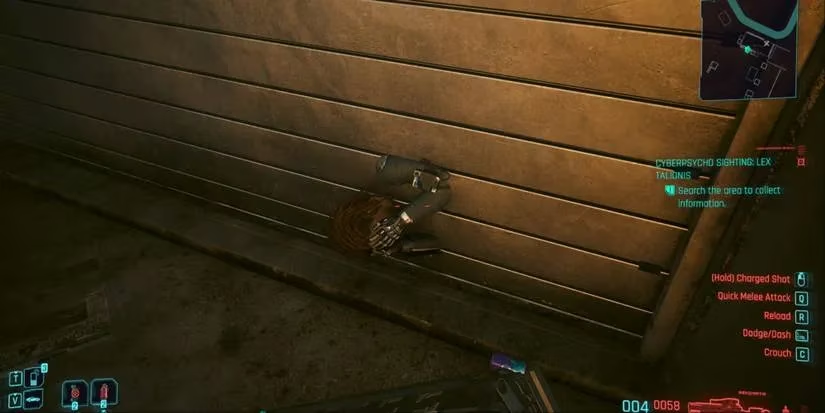
One of the most stubborn categories is the unlootable body glitch. In a game where loot and iconic weapons define build progression, an enemy that cannot be searched after death is more than a minor annoyance—it can lock entire missions. One notorious example from the base game, untouched even in 2026, involves a cyberpsycho encounter where the target collapses beneath a staircase. Without the ability to retrieve the quest item from the corpse, the gig remains permanently incomplete, and the associated rewards vanish forever. I encountered a similar wall in Phantom Liberty: a side gig required investigating a specific dead body to trigger a boss fight, but the interaction prompt never appeared. Reloading an older save occasionally fixes such problems, but it is a lottery. Frequently, enemies lying in open ground display as lootable on the mini-map yet refuse to yield any items, their gear seemingly clipped into the geometry or despawned by an invisible logic error.
These issues scale into a deeper problem: environmental interaction remains inconsistent. The strobe-light flickering that haunted launch builds has not been fully exorcised. In walks through the city, I witnessed staircases outside V's apartment erupting in blinding, flashbang-like pulses every few seconds. A streetlight near Dogtown and even a puddle of blood on the pavement emitted the same aggressive strobing, unaffected by time-of-day changes or graphics settings. Such visual distortions aren't just ugly; in a game that relies on quick combat and situational awareness, they actively impair visibility and contribute to sensory overload.
A particularly damning bug resurfaced when I attempted to carry over a finished save file into Phantom Liberty's content. Despite owning the expansion and having completed the main campaign, the entrance to Dogtown remained stubbornly locked. So Mi, the character whose appearance triggers the new questline, never materialized. Reloading saves, rebooting the game, and even verifying the installation achieved nothing. The only workaround was to abandon hundreds of hours of progress and start a brand-new file, fast-forwarding to the expansion's start. For dedicated players who had poured time into perfecting their character builds and relationships, this felt like a betrayal—a reminder that beneath the surface, foundational quest-logging systems are still fragile.
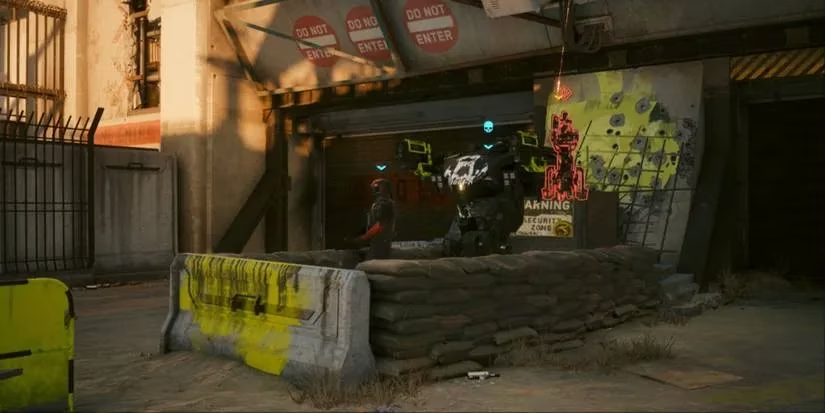
It would be disingenuous to pretend these glitches affect everyone equally. Players who stick rigidly to the campaign, ignore side gigs, and tune out the bustling but frequently glitched pedestrian traffic might indeed conclude the game is fixed. For completionists, however, the experience remains a minefield. Every gig that requires looting a specific body, every cyberpsycho hunt that demands an intact corpse, every stealth section where an enemy might clip through a wall—these moments demand a constant cycle of quicksaving and reloading. I lost count of the iconic weapons that likely vanished because a fallen foe's loot drifted out of bounds, the game's physics failing to contain its own chaos.
The persistence of these bugs in 2026 raises uncomfortable questions about quality assurance. While CD Projekt Red has poured resources into narrative expansions and cinematic refinements, the core engine still buckles under the weight of its own ambition. Phantom Liberty's marketing promised a redemption arc, and in many ways it delivered—but the rehabilitation feels incomplete. A game that sold tens of millions of copies should not require players to develop a sixth sense for which alleyways might trap a vital quest item or which save files will suddenly refuse to access paid DLC.
In the end, Cyberpunk 2077 in 2026 is a less spectacular mess than it was at launch, but it is still a mess. The bugs are no longer funny viral sensations; they are tedious, immersion-breaking hurdles that punish engagement with the game's world rather than rewarding it. For newcomers drawn in by the anime, the updates, or positive word-of-mouth, the reality can be jarring. And for veteran completionists, each playthrough remains a testament to patience rather than polish—a dance with a digital ghost that never quite materialized as promised.