Cyberpunk 2077's Phantom Liberty expansion did more than add a spy-thriller district and a new cast of characters. It fundamentally reworked how V is built. When the expansion arrived, it forced every player—whether they liked it or not—to respec their character. In 2026, that decision remains one of the most consequential moments in the game's lifecycle, especially for returning players who load old saves and discover that their favorite cybernetic loadout no longer works the same way. Character customization has always been central to Cyberpunk 2077: appearance, attributes, perks, lifepath, and Cyberware all combine to define V. Players grow attached to those choices. A smooth-talker learns to talk past guards. A netrunner learns to crack doors from a distance. Phantom Liberty disrupted those ingrained habits by rewriting the rules underneath them.
A New Skill Tree, A New V
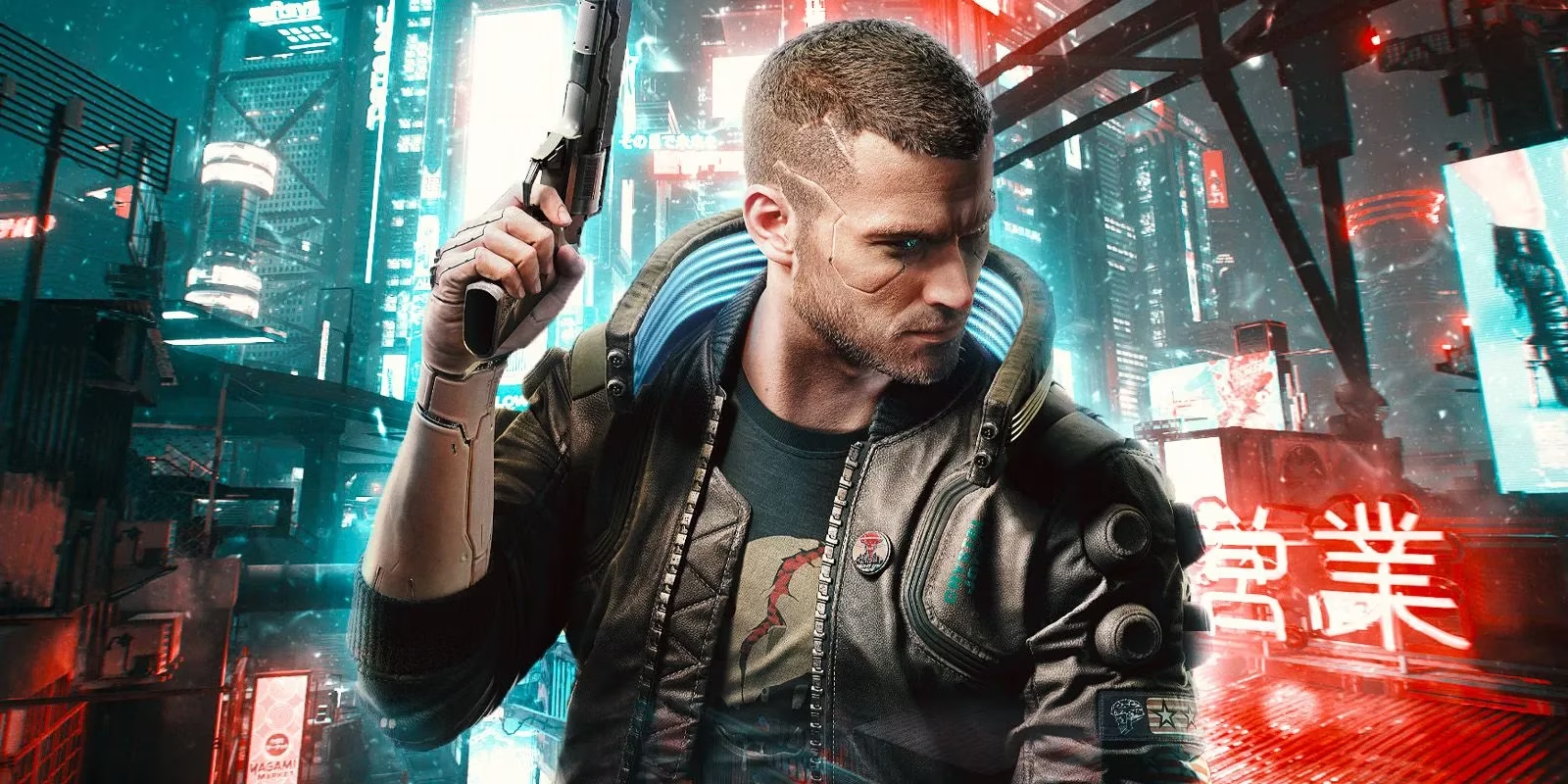
Phantom Liberty effectively turned Cyberpunk 2077 into a whole new game. It added disguise mechanics, a new gang, and a host of enemies, vehicles, weapons, and gear. It also revamped many core mechanics: an all-new skill tree, updates to the loot system, and the opportunity for vehicular combat. As part of those skill tree updates, players gained the opportunity to completely rebuild their characters. The Cyberware system also changed, allowing players to add or remove active, passive, and conditional abilities at will. Because this customization mechanic changed, V had to undergo a procedure to completely reset their Cyberware and reboot their internal systems from scratch.
Why Mandatory Respec Was Necessary
Skill tree adjustments necessitate a respeccing system. With such widespread changes, certain builds risk becoming unbalanced or even completely nonviable. A total stat overhaul lets affected players go back and tweak their characters without creating a new Cyberpunk 2077 save. Cyberware is more complicated. The original Cyberpunk tabletop game incorporated Cyberpsychosis, where too many cybernetic implants caused characters to lose touch with reality and eventually self-control. That was removed from the video game. With Johnny Silverhand and a nigh impermeable suit of plot armor, V is effectively immune to Cyberpsychosis no matter how much Cyberware they install. NPCs are still subject to it, which sometimes becomes a plot point. The lack of a Cyberpsychosis mechanic encouraged players to experiment more with Cyberware because it is such a powerfully versatile method of customization. Some player-created mods added similar mechanics, but Cyberpsychosis was not a factor in the vanilla version—until Phantom Liberty.
The New Cyberware Capacity System
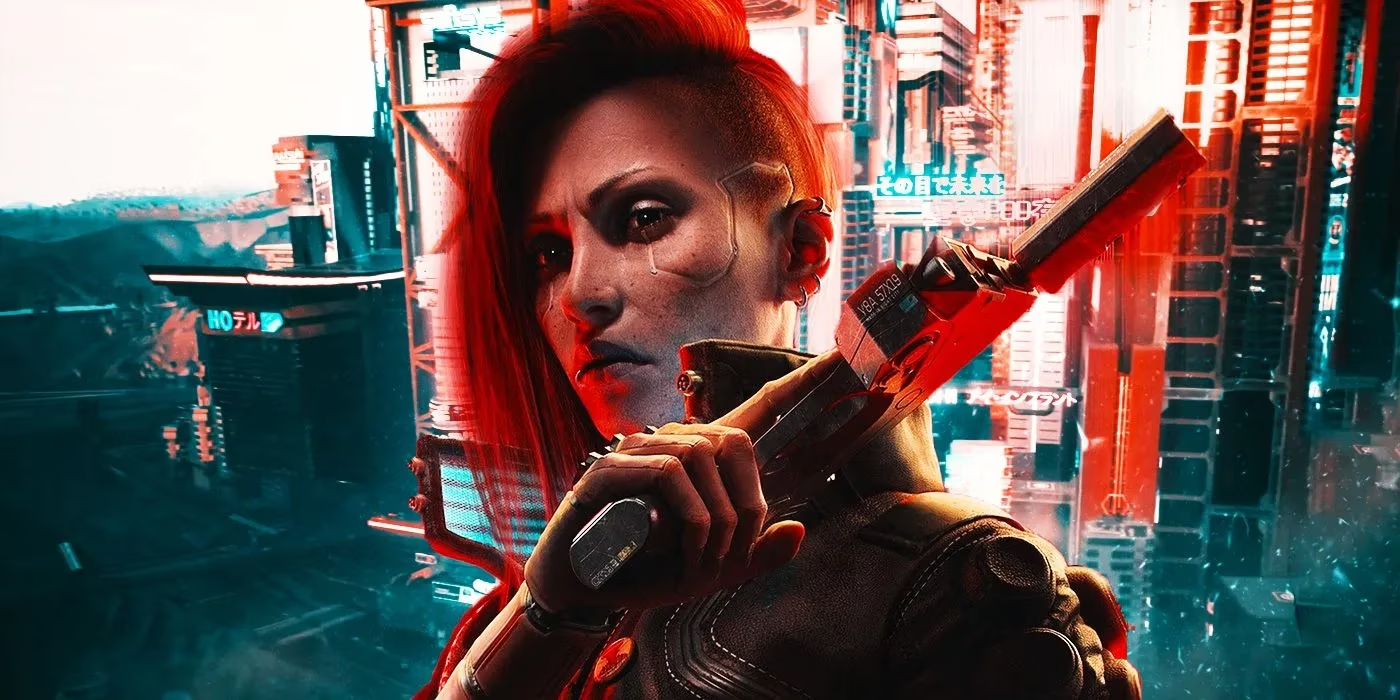
Phantom Liberty adds a similar, albeit far less devastating, system of Cyberpsychosis. Now V can install more Cyberware than they would normally be able to, but each additional component over the limit comes at a cost. This functions as a sort of debuff. If V overstretches their Cyberware capacity, they experience statistical penalties that make it harder to function normally. For example, too many parts installed in the circulatory system may impact maximum HP and overall healing capabilities, while too many in the frontal lobe might make Intelligence checks and hacking more difficult.
| Cyberware Overload | Possible Penalty | Playstyle Impact |
|---|---|---|
| Circulatory system | Lower max HP, weaker healing | Avoid prolonged firefights |
| Frontal lobe | Harder Intelligence checks, hacking | Netrunning and stealth become risky |
| Skeleton | Reduced mobility or durability | Direct combat needs more caution |
| Nervous system | Slower reflexes or reduced crit chance | Precision builds suffer |
This should allow for greater cybernetic abilities at greater personal risk, and it may actually increase Cyberpunk 2077 customization in certain cases. It definitely drives certain types of characters to commit to their strengths and avoid their weaknesses. For example, hacking-focused characters may be able to install more Cyberware to help them get past tough systems, but that might come at the cost of HP and force them to avoid combat. Combat-focused characters may want to take on more Cyberware that increases their damage output, but could become weaker at hacking as a result, requiring them to force their way into enemy hideouts instead of sneaking around.
How to Respec V
Cyberpunk 2077 already has a system for respeccing V, so it is unlikely much changed there with the new skill tree. In the lower left corner of the Character menu screen, there is a button that reads 'Reset Perks,' which turns all of V's abilities back to zero and allows the player to reassign them. This usually costs V a few Eurodollars, and the more perks they have, the more it costs. Therefore, it was likely that downloading the Phantom Liberty update came with a single freebie: a one-time use of the respec ability that V could use to get accustomed to the new skill tree.
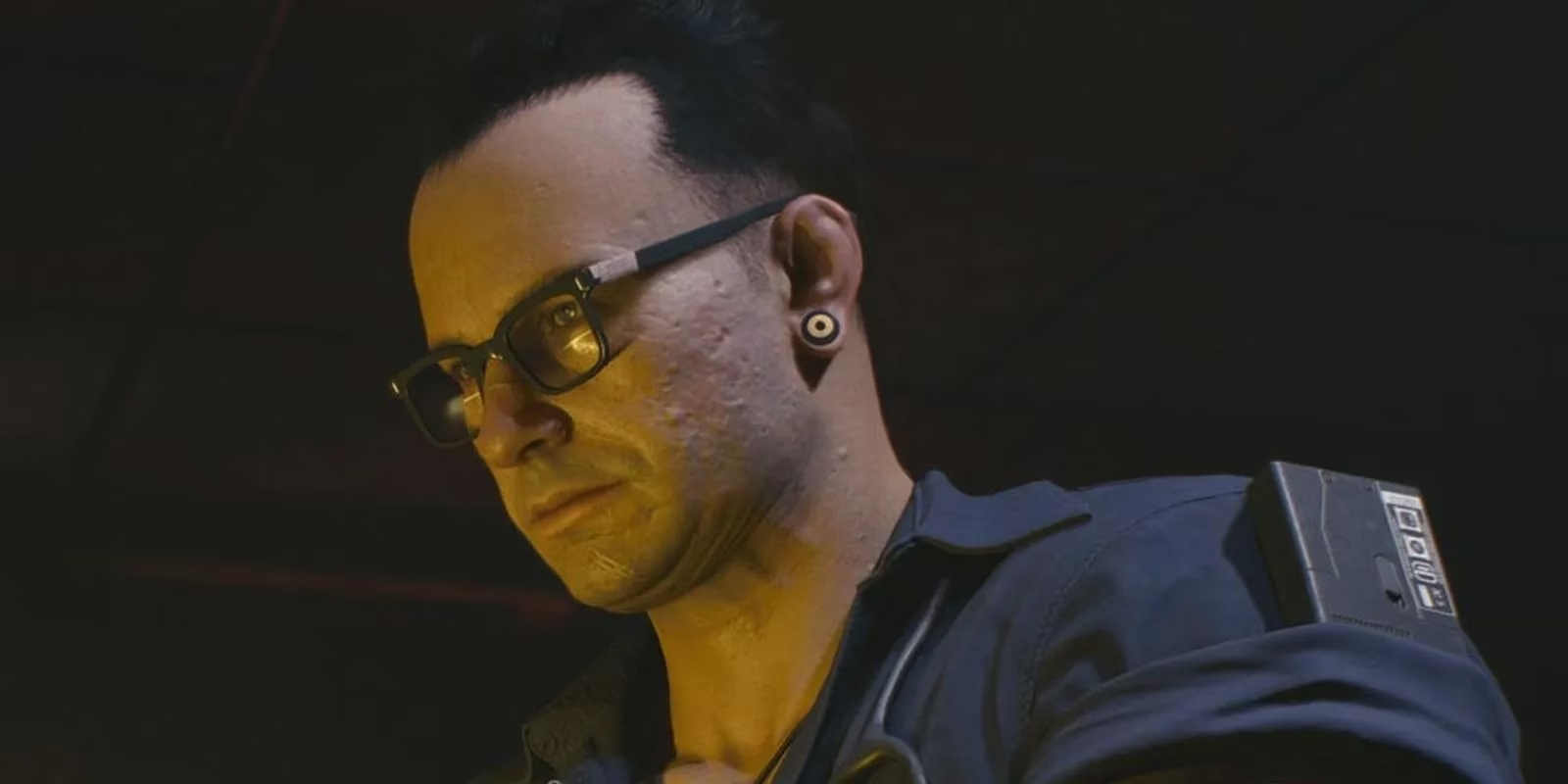
Reconfiguring Cyberware may take a little more doing. Phantom Liberty adds a side quest, which V can undertake by speaking to Viktor Vektor in Cyberpunk 2077. Again, with completion of Vik's new side quest, this first Cyberware reinstall was probably free so that everyone could get up to speed on the new system. That helps avoid any stat downgrades imposed by the changes and allows everyone to take advantage of the higher limits without paying the price. The side quest is only required for those with existing save files, while anyone starting a new save simply uses the new system from the beginning.
Why It Still Matters in 2026
It may sound like a hassle, but ultimately everyone stands to benefit from these changes. While some builds were doubtless damaged by the changes to Cyberware and skill trees, the ability to respec for free, even just once, encouraged those characters to try new things and get a new lease on life. It all came down to how those changes were implemented when the Phantom Liberty DLC for Cyberpunk 2077 was released. Years later, in 2026, the mandatory respec looks less like a punishment and more like a reset button. It pushed min-maxers to rethink their priorities and role-players to reconsider what kind of V they wanted. In Night City, adaptation is survival. Players who embraced the reset often found a stronger, stranger, and more specialized V on the other side. 🎮🧠💥
This discussion is informed by coverage from CNET - Gaming, where broader tech-focused reporting helps frame why Phantom Liberty’s mandatory respec wasn’t just a balance patch but a systemic redesign: when perks and Cyberware rules change at the foundation, legacy saves can’t reliably preserve old power curves, so CDPR’s one-time rebuild effectively “migrated” players to a new baseline and encouraged re-optimizing V around the updated capacity trade-offs, performance expectations, and playstyle specialization.