In 2026, the modding landscape of Cyberpunk 2077 stands as a testament to resilience, but looking back, the autumn of 2023 was a digital cataclysm. When CD Projekt Red released the transformative 2.0 update alongside the Phantom Liberty expansion, it shattered years of community-crafted enhancements like a wrecking ball through a glass metropolis. The studio proactively disabled all mods to prevent catastrophic code conflicts, leaving PC players stranded in a vanilla world they had long since abandoned.
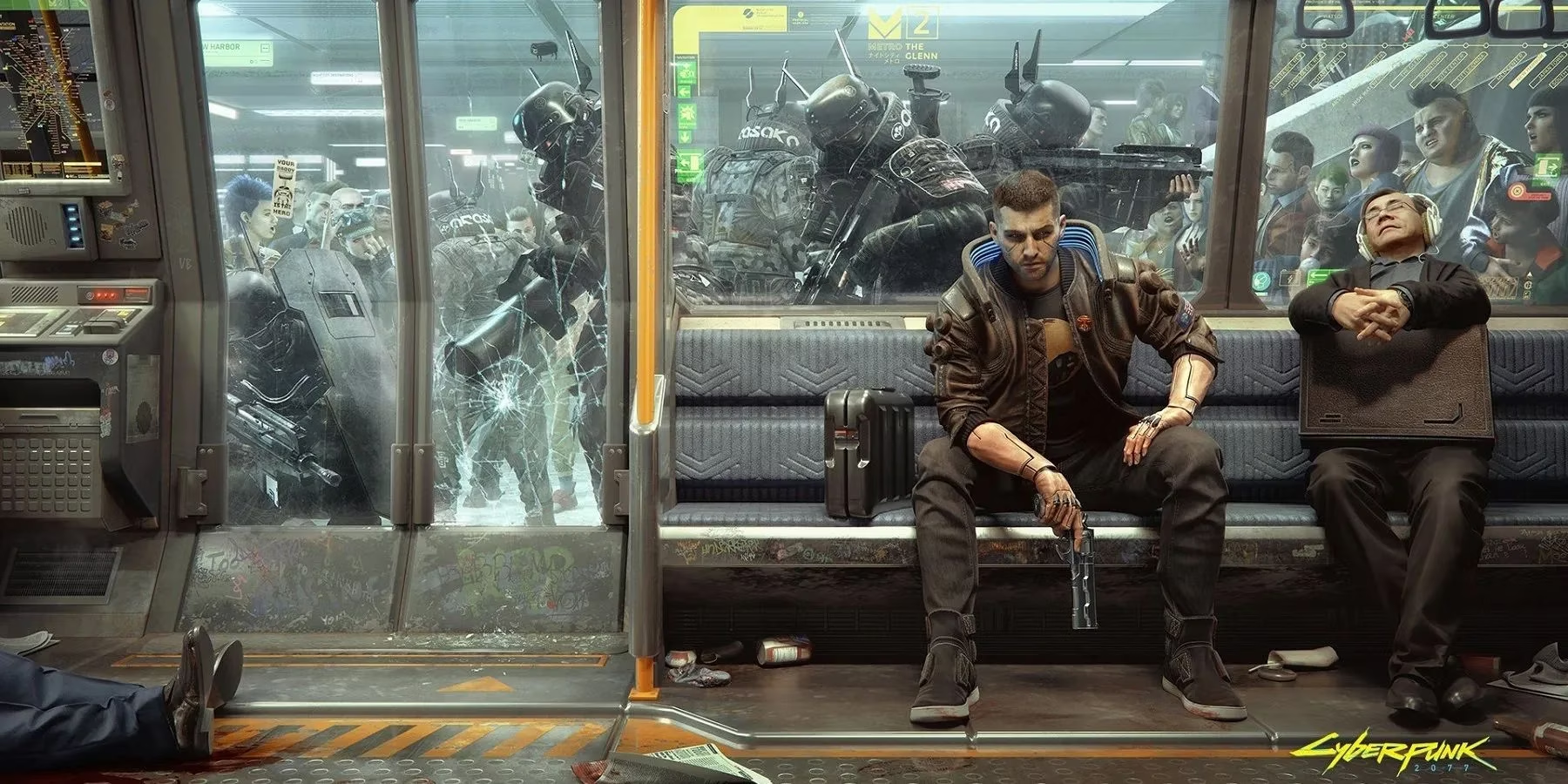
Within days, however, the first signs of digital life stirred. Two core pillars of the modding scene—Cyber Engine Tweaks and REDext—began functioning again, acting as a lighthouse sweeping through the fog of incompatibility. These tools are the scaffolding that allows modders to access internal scripting and script extensions; without them, most ambitious projects would remain impossible. Their return, though initially fragile and incomplete, was a slow-burning fuse that rekindled creativity across the community. Cyber Engine Tweaks enabled cheats and deep engine manipulation, while REDext gave script extensions a foothold, but both required several follow-up updates before regaining full stability.
Even with these foundational elements stirring, the majority of player-facing mods stayed frozen, like hibernating animals waiting for spring signals that kept flickering. Projects that transformed Night City into a Blade Runner dystopia, swapped the protagonist for Ciri or Johnny Silverhand, or overhauled combat and driving mechanics remained dormant. Each mod was a bespoke creation dependent on its original author's time and willingness to recode for the 2.0 architecture. The process was less a sprint and more a painstaking archaeological dig through the rubble of skill trees, police behaviors, and UI changes—all of which had been completely reworked in the base game.
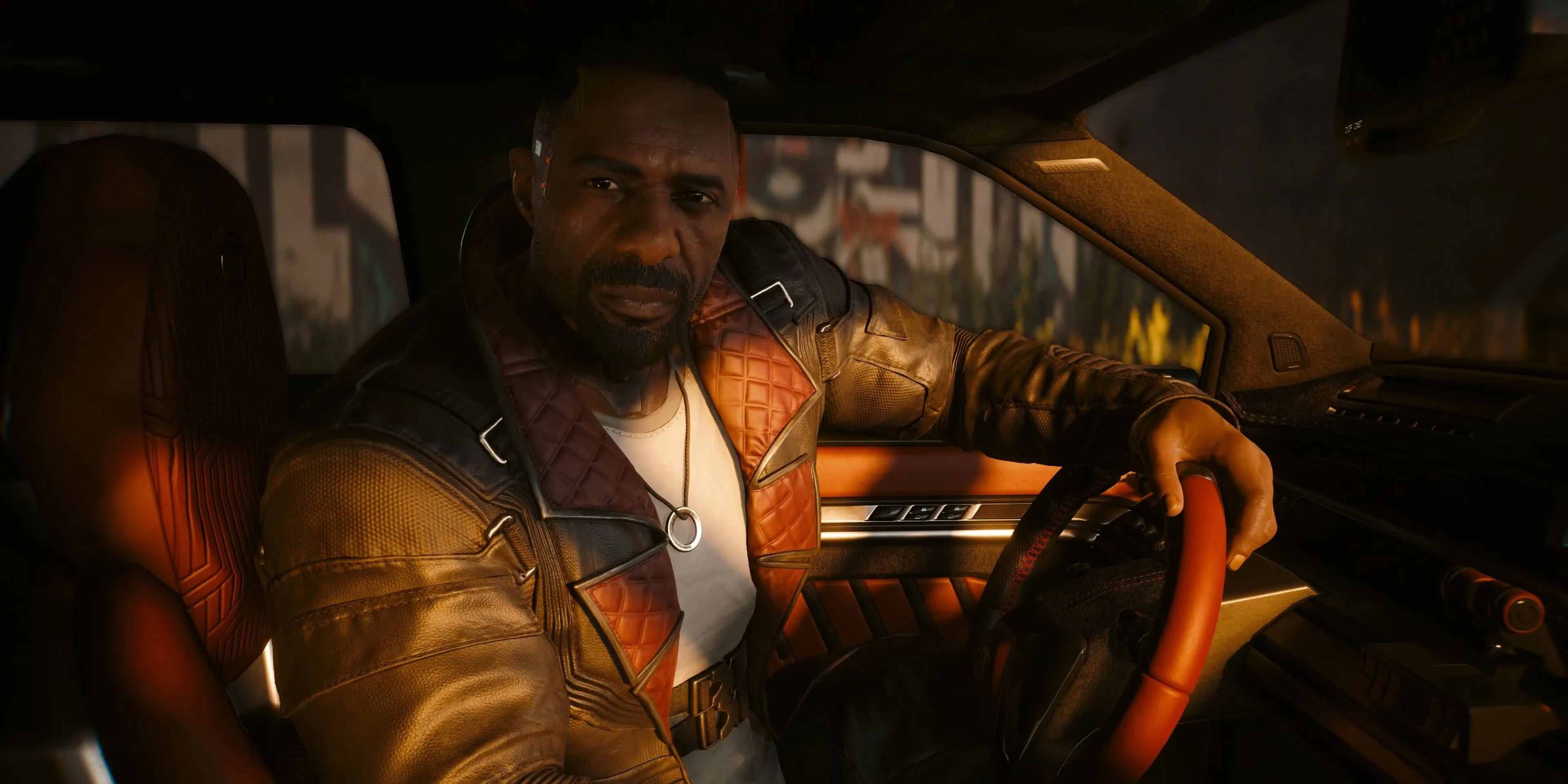
The 2.0 update itself, however, was a monumental leap forward for the unmodded game. CD Projekt Red completely reimagined the police system, redesigned the skill trees into more meaningful branches, added a suite of new perks, and delivered the Phantom Liberty expansion—a 15- to 20-hour storyline that many critics hailed as the grand finale of the studio's redemption arc. But for mod users, this gleaming new Night City initially felt hollow without the personalized tweaks they had grown to depend on.
Fast forward to 2026, and the scenario has changed radically. What was once a fragmented landscape of broken mods has healed into a resilient, interconnected ecosystem—much like a regenerated coral reef where every recovered species attracts new life. Today, over 80% of the most popular mods from 2023 have been updated or replaced by superior alternatives that were built from the ground up for 2.0 and beyond. Entirely new genres have blossomed: full VR conversions that make Night City a truly immersive urban jungle, AI-driven NPC dialogue that gives every pedestrian a unique story, and living economy systems that simulate supply and demand. The core tools that first flickered back to life now serve as an unshakeable bedrock, having evolved into versions with advanced debugging and more robust APIs.
The odyssey from that 2.0 disruption taught modders to build with adaptability, weaving fail-safes and modular designs into their work. Creators who had abandoned the scene gradually returned, drawn by a game that had proven its staying power. Community collaborations flourished, resulting in curated modpacks that offer one-click installations for players who want everything from visual overhauls to gameplay rebalances. The initial storm of mod incompatibility has thus become a catalyst for a more inventive and durable modding culture—a phoenix rising not from ashes, but from tangled code.
Ultimately, Cyberpunk 2077's modding journey mirrors the game’s own narrative of redemption. Just as the title clawed its way from a disastrous launch to critical acclaim with Phantom Liberty, its modding community weathered a digital winter and emerged into an eternal spring of user-generated content. While the autumn of 2023 felt like a collapse into darkness, it was actually a pruning phase that allowed healthier growth. By 2026, the mod scene no longer merely repairs the game; it redefines its boundaries, proving that even a shattered city can rebuild itself into something legendary.