A few years ago, the RPG landscape was rocked by two colossal expansions arriving in quick succession. Gamers still vividly remember how September 2023 treated them like royalty: Baldur’s Gate 3 had finally landed on PS5, Starfield promised a universe of possibilities, and Cyberpunk 2077: Phantom Liberty dropped like a redemption bomb. Fast forward to 2026, and the dust has settled. Looking back, it’s clear that one DLC became the gold standard while the other just sort of… drifted into the void. Phantom Liberty didn’t just salvage CD Projekt Red’s reputation – it rewrote the rulebook on how to fix a broken masterpiece. Meanwhile, Starfield: Shattered Space, which launched in late 2024, ended up as a cautionary tale about squandered potential.
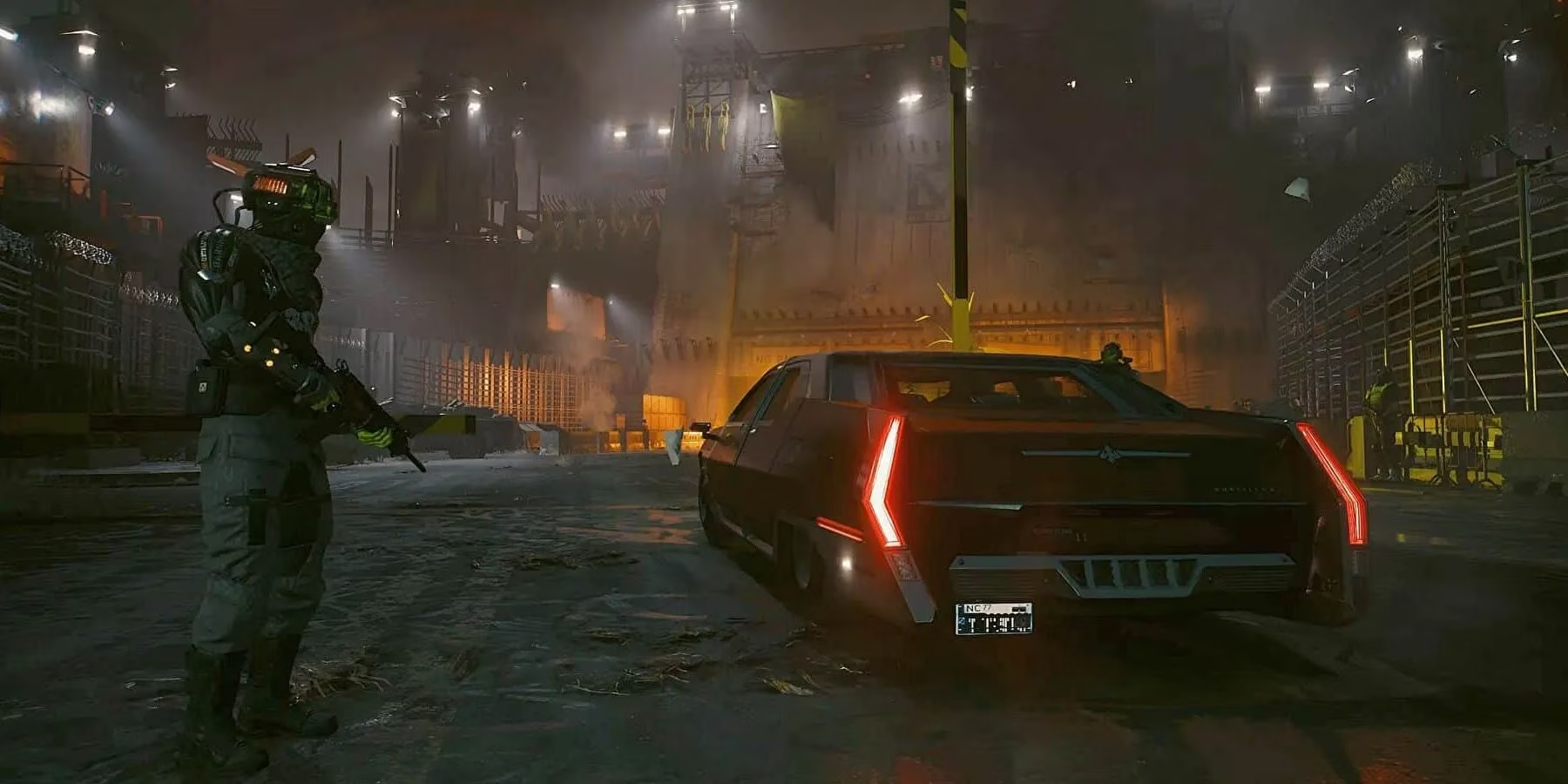
When Cyberpunk 2077 first crawled out of the wreckage of its 2020 launch, the odds were stacked against it like a gonk trying to klep from Arasaka. But the 2.0 update paired with Phantom Liberty felt like a full-body cyberware installation – everything suddenly clicked. The expansion brought a gripping spy thriller narrative, a dense new district in Dogtown, and a level of polish that made Night City feel genuinely alive. By the time 2026 rolled around, Phantom Liberty had sold upwards of 8 million copies and had become the poster child for redemption arcs. The voice acting, the morally grey choices, and the breathtaking set pieces kept players coming back for seconds, thirds, and fourth playthroughs. It’s the kind of content that makes you say, “Now this is what a DLC should feel like – a straight-up shot of adrenaline to the heart.”
Bethesda, on the other hand, had a mountain to climb with Starfield. The base game was a massive commercial success, but the cracks were showing: procedurally generated planets that felt emptier than a ghost bar, loading screens galore, and a main quest that lacked the punch of Skyrim or Fallout 4’s best moments. When Shattered Space finally materialized in October 2024, fans hoped it would be Bethesda’s own Phantom Liberty moment – a chance to inject life into the Settled Systems and silence the naysayers. Spoiler alert: it didn’t quite stick the landing.
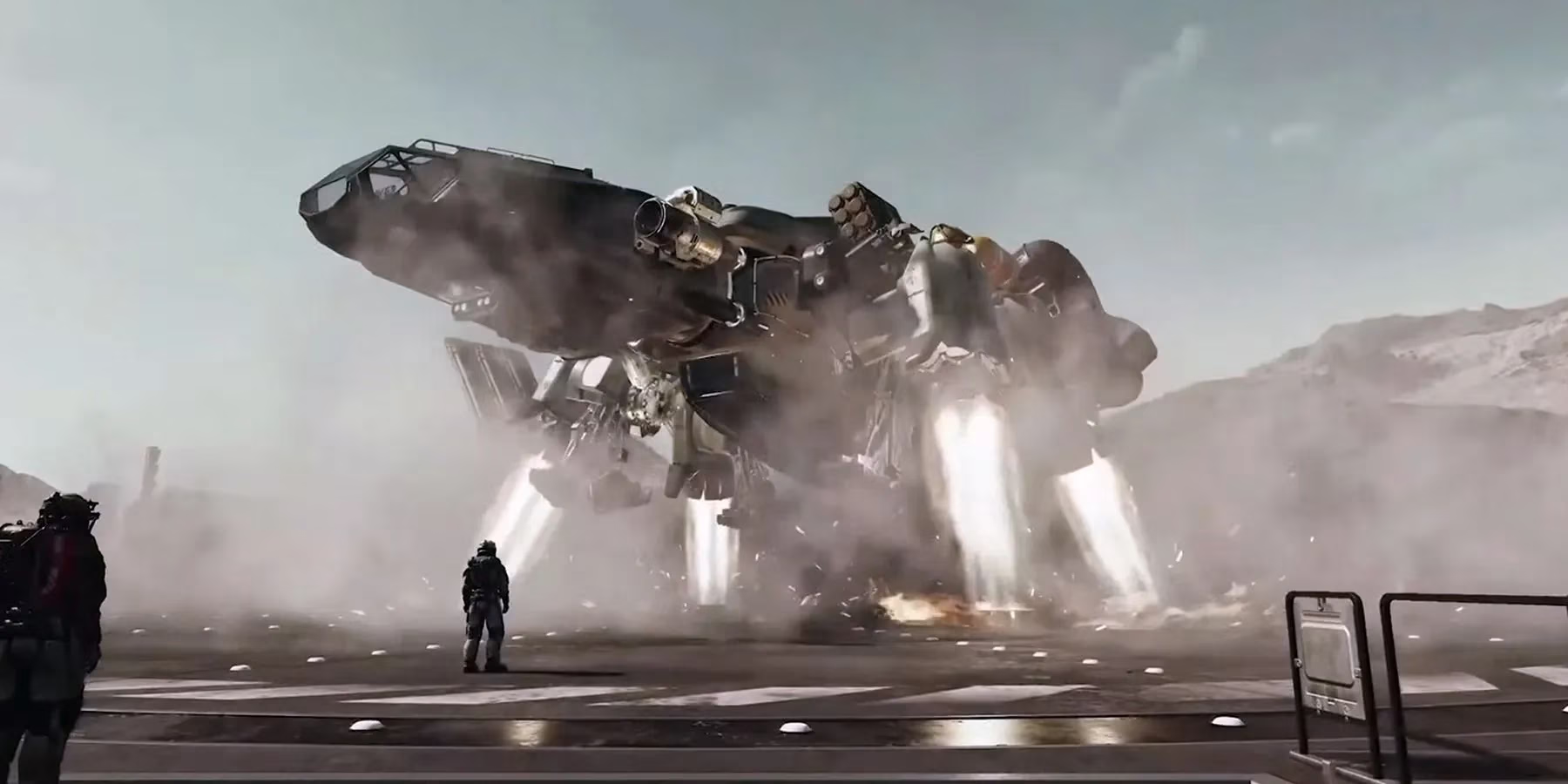
Shattered Space wasn’t a disaster by any stretch, but it felt like a missed opportunity bigger than the Eye of the Crimson Fleet. The expansion took players to a new handcrafted star system steeped in dark cosmic horror, complete with eerie derelict stations and a cult obsessed with subspace anomalies. The atmosphere was thick enough to cut with a spoon, and the new ship-building modules let you craft vessels that would make even Lando Calrissian jealous. However, the core loop still relied heavily on the same old formula – talk to NPC, fast travel to mission, shoot some spacers, repeat. The branching narrative promises fell as flat as a day-old soda, leaving players with choices that felt about as meaningful as picking a toothpaste brand.
Where Phantom Liberty thrived was in its laser-focused storytelling and its refusal to waste the player’s time. Every side gig, every character interaction felt intentional. Shattered Space, by contrast, padded itself with radiant quests and resource-gathering busywork that had long overstayed its welcome. Johnny Silverhand’s biting commentary and Idris Elba’s stellar performance as Solomon Reed made Phantom Liberty a cinematic feast, while Starfield’s cast – though improved – couldn’t escape the wooden Bethesda dialogue curse. To be fair, the space combat and zero-G gunfights added spectacle, but they couldn’t mask the feeling that the expansion was playing catch-up rather than pushing boundaries.
A major factor separating the two was the approach to post-launch support. CD Projekt Red treated Phantom Liberty as a foundational reset, and they continued releasing substantial hotfixes and free mini-updates well into 2025, keeping the community engaged. Bethesda, historically reliant on modders to fill in the gaps, delivered a few patches to smooth out Shattered Space’s launch bugs but largely moved on to The Elder Scrolls VI production. As a result, the Starfield mod scene exploded with amazing work – fan-made quests and cut content restorations – but the official DLC never quite shook off the “wait for the modders to fix it” reputation. In 2026, it’s a bit of a running joke in the gaming community: “Want the true Shattered Space experience? Download these 47 mods first.”
The ripple effects of these two expansions are still felt in the industry. Phantom Liberty proved that a redemption arc isn’t just about fixing bugs – it’s about overdelivering on the original promise and then some. It became a benchmark that publishers now cite when greenlighting extended development cycles for troubled titles. Shattered Space, meanwhile, served as a reminder that a big world needs more than just scale; it needs soul. Bethesda’s next DLC attempt – if it ever arrives – will face even higher expectations now that the bar has been raised so dramatically.
For the discerning RPG fan in 2026, the verdict is clear as Corpo plaza’s neon glow. If you crave a tightly woven narrative that respects your time and makes you feel every high-stakes decision, Phantom Liberty is still the undisputed champ. If you’re in the mood for some cosmic vibes and don’t mind a bit of repetitive grind, Shattered Space has its moments – but it’s the kind of experience you dip into rather than devour. At the end of the day, both expansions taught us the same lesson: a great DLC can either be a phoenix rising from the ashes or a spaceship that never quite breaks orbit. And in this race, Night City’s finest left the starfield in the dust.
Cyberpunk 2077: Phantom Liberty is available on PC, PS5, and Xbox Series X/S. Starfield: Shattered Space is playable on PC and Xbox Series X/S.