When I first jacked into the gritty streets of Night City back in 2020, I was immediately drawn to the archetype of the netrunner. There’s something uniquely satisfying about dismantling an entire squad of gangoons without ever drawing a weapon, melting their synapses from the shadows. Fast forward to 2026, and after countless patches, the 2.0 overhaul, and the Phantom Liberty expansion, this build remains not only viable but more thrilling than ever. I’ve spent hundreds of hours refining my approach, and now I’m going to share my definitive netrunner quickhacking build, covering attributes, quickhacks, weapons, armor, and cyberware. Let me walk you through how to become the ghost in the machine.

The Philosophy of the Quickhacking Build
The core of this build is balance and versatility. I never have to choose between a silent, remote takedown and a ballsy frontal assault. With my eyes on the camera grid and a deck full of daemons, I can fry half the enemies in a room before I even step inside. Then I switch to a smart SMG to mop up the survivors. This isn’t a one-note stealth build; it’s designed to let you control the battlefield from afar, use environmental tech like cameras and turrets, and still hold your own if things get loud. The flexibility means you can adapt to any gig, any trap, and any corp security team that Night City throws at you.

Best Attributes For a True Netrunner
Your attribute spread will make or break this build. I focus on three pillars: Intelligence, Technical Ability, and Body, in that order. Intelligence is the non-negotiable star here – every point you drop into it unlocks faster breach protocols, higher RAM recovery, and deadlier quickhack damage. I max Intelligence out first, without hesitation. Once that tree is capped, I pour everything into Technical Ability to boost armor and open up cyberware capacity upgrades. Body comes last, giving me the durability to survive those moments when a fight goes feral.
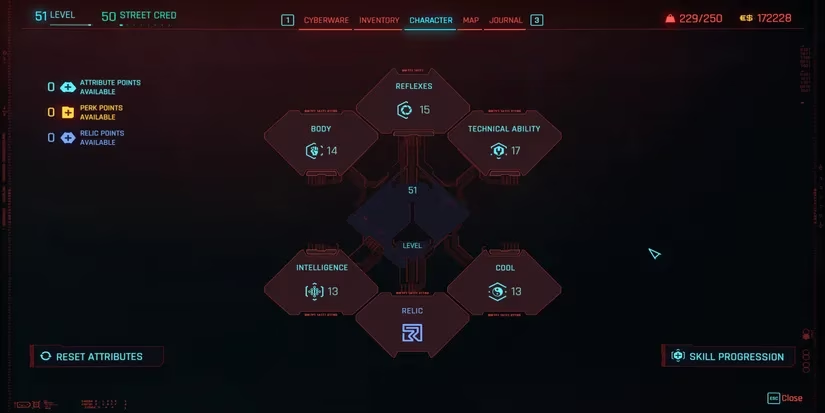
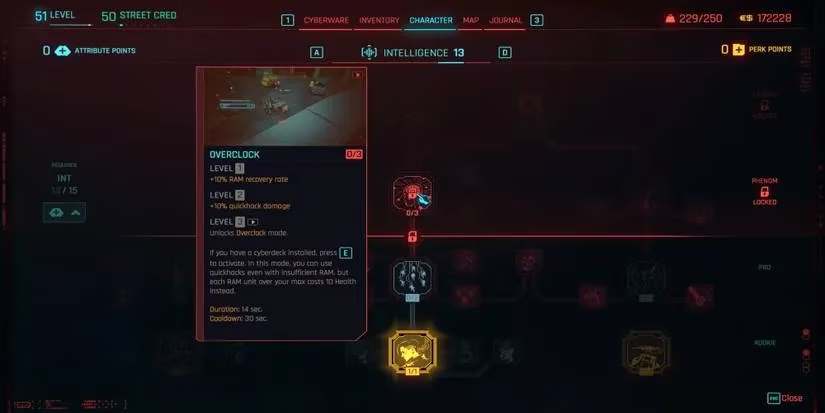
Don’t ignore Reflexes and Cool entirely, though. I toss at least a couple of points into each to grab baseline perks – extra crit damage and faster movement can save your run. If you’re playing without Phantom Liberty, the level cap sits at 50, so be judicious. With the expansion, you get a raised cap of 60 and 10 additional attribute points, which I gladly sink into Reflexes and Cool to round out the build. The DLC also throws the Relic Skill Tree into the mix, and boy, does it supercharge a netrunner. I grab the queue branch perk that heals me for 15% max health and recovers 5 RAM on activation. Next, the Overclock branch perk that makes my Monowire attacks replenish RAM. Finally, I unlock the Thermal Monowire upgrade, giving every slash a chance to ignite enemies. Combine that with the Contagion quickhack, and you get a chaining fireball explosion that damages nearby hostiles without hurting yourself – it’s pure chaos and I love it.
Best Quickhacks: My Digital Arsenal
Quickhacks are your primary weapon, far more than any gun. I’ve built my deck around a set of daemons that allow me to cripple, distract, and obliterate enemies without ever tripping an alarm. Here are the essential quickhacks I keep slotted at all times:
-
Ping – reveals every device and enemy connected to a network, turning the entire building into a transparent playground.
-
Cyberware Malfunction – disables an enemy’s implants temporarily, making them easy pickings.
-
Short Circuit – deals heavy electric damage; my go-to for stealthy instant kills on unalerted targets.
-
Contagion – spreads poison between closely grouped enemies, and with the Thermal Monowire synergy, it becomes a detonator.
-
Overheat – causes a target’s cyberware to thermally overload, dealing fire damage and causing panic.
-
Synapse Burnout – a finisher that deals large damage and can trigger quickhack spreading perks.
-
Reboot Optics – blinds the target for a few precious seconds, creating a window for repositioning or a silent takedown.
-
Memory Wipe – resets an enemy’s alert state, letting you vanish even after they’ve spotted you.
-
Cripple Movement – roots a target in place, making them helpless against your follow-up attacks.

Chaining these together creates devastating combos. My favorite opener: Ping the subnet, tag every threat, then upload Contagion to the densest cluster. While they cough and stagger, I drop a Short Circuit on the strongest enemy and Reboot Optics on any sniper watching the room. By the time I walk in, half of them are already digital ghosts.
Weapons & Armor: Tools for the Augmented Mind
When bullets start flying, you’ll want hardware that syncs with your quickhack-oriented brain. This build inherently boosts Smart weapons, so that’s where I spend my eddies. My top three picks:
-
Prototype: Shingen Mark V – this smart SMG fires in 3-round homing bursts and can set targets ablaze, which beautifully complements Overheat and the Thermal Monowire.
-
Yinglong – a fully-automatic smart SMG that deals electrical damage and occasionally triggers an EMP, disabling enemy cyberware and electronics in a radius. It’s a fortress breaker.
-
Ba Xing Chong – the legendary smart shotgun you can loot from Adam Smasher’s corpse. Its 50% armor piercing and multiple homing projectiles make it the ultimate \"delete button\" for anything standing after your quickhack storm.
Armor statistics were heavily slimmed down in Update 2.0, so now your defense comes more from cyberware than the clothes on your back. Still, a few high-rarity pieces grant quickhack-related bonuses that I always seek out:
-
Corporate Netrunner Helmet with Thermoregulation – increases enemy quickhack upload time by 15%, giving you precious extra seconds to react.
-
Military-Grade Aramid Netrunning Suit – reduces quickhack damage taken by 15%, a lifesaver when rival netrunners try to fry you back.
-
Aoi Tora BD Wreath – shaves 10% off your quickhack upload time, making your own daemons hit faster.
Best Cyberware: Wiring Up for Net Dominance
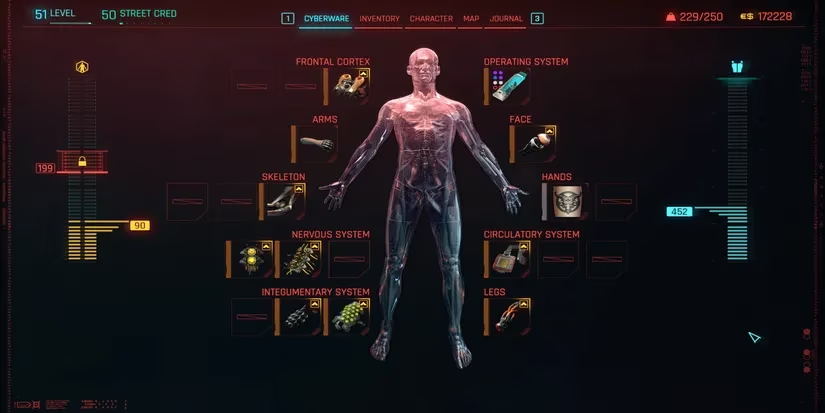
The 2.0 cyberware overhaul introduced a capacity system that forces hard choices – you can’t chrome yourself from head to toe without heavy investment in tech perks. For a netrunner, the following implants are what I consider the backbone of the build. Pick based on your playstyle, but never skimp on the operating system and frontal cortex.
-
Operating System: Netwatch Netdriver Mk.5 – boosts RAM recovery rate and allows a 4-second quickhack spread window after a breach protocol. Absolutely essential for chaining combat hacks.
-
Frontal Cortex: Ex-Disk – increases RAM capacity and quickhack damage, while reducing upload time. The Netwatch variant pairs perfectly with the OS.
-
Arms: Monowire (Thermal) – already covered in the Relic tree; the Monowire turns you into a close-range monster that scales with your reflex and technical ability.
-
Ocular System: Kiroshi Optics – essential for scanning and marking, plus the zoom and threat detection make it a netrunner’s scout tool.
-
Circulatory System: Biomonitor – automatically uses a health item when your health drops below 35%, letting you stay focused on quickhacks rather than inventory menus.
-
Integumentary System: Subdermal Armor – flat armor increase that helps you survive those inevitable bullets when cover fails.
Everything else fills out your capacity limit as you see fit. I tend to add RAM upgrades and heat dissipation modules to keep my deck cold and my hacks flowing. The beauty of this build in 2026 is how customizable it remains even after all the patches – you truly can make V the netrunner you’ve always envisioned.