I remember loading Cyberpunk 2077 after the 2.0 update dropped and switching my language pack to Ukrainian on a whim, expecting the usual localisation polish: corrected idioms, smoother subtitles, maybe a few cultural tweaks. Instead, the game’s text felt like a tripwire hidden inside a beautifully rendered menu. Language localisation usually behaves like wallpaper—quiet, functional, nearly invisible. This one behaved like a trapdoor, dropping me into a real-world war that had been stitched into Night City without CD Projekt Red’s knowledge or approval.
🧱 The Graffiti That Refused to Stay Fictional
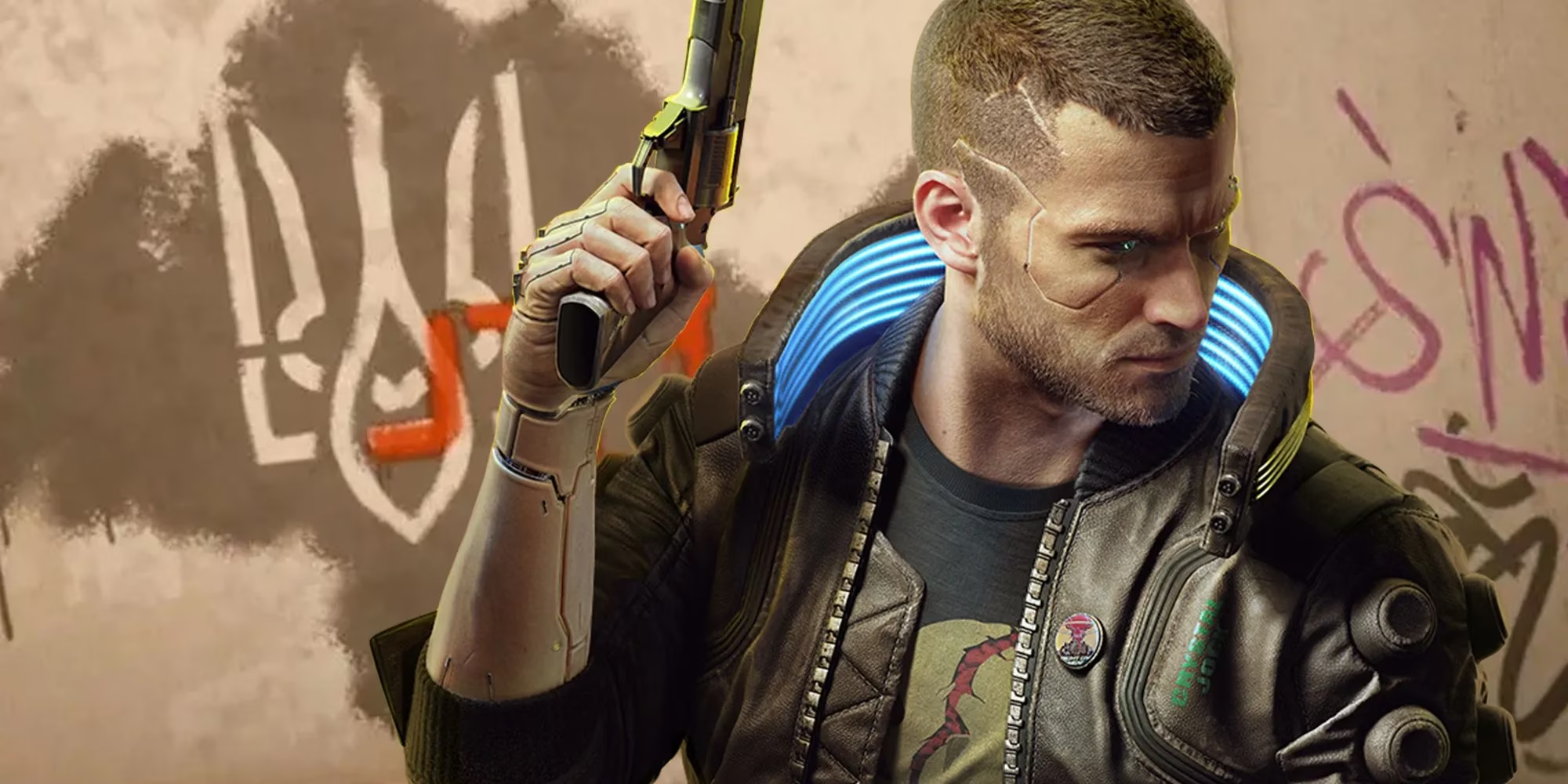
As I explored the game, the first hard evidence was not in a dialogue tree but on a wall. A new piece of graffiti showed the outline of Crimea, the Ukrainian coat of arms, and the taraq tamga of the Crimean Tatars. The imagery worked like an aerosol palimpsest, letting the actual Russian invasion of Ukraine bleed through the neon surface of a fictional dystopia. To anyone familiar with the region, the message was unambiguous: even in 2077, Crimea remained Ukrainian territory. Arsenii Tarasov, an organiser of the Ukraine-based Indie Cup, later explained the symbols when asked at the time. The juxtaposition of the coat of arms and the Crimean Tatar symbol turned the graffiti into a declaration rather than decoration.
💬 Dialogue Edits and UI Tripwires
The dialogue edits were just as pointed. In the English script, one line had been “We’re fucking through.” In the Ukrainian localisation it became a phrase translating roughly to “Go fuck yourself in the same direction as the ship did.” That was not random vulgarity. It pointed directly at Ukrainian border guard Roman Hrybov’s now-legendary reply to the Russian missile cruiser Moskva when asked to surrender in February 2022. Reading it in my quest log felt uncanny, as if a piece of wartime folklore had been smuggled into V’s mouth.
Another line involving the Scavengers faction was quietly sharpened. The English version asked, “Couldn’t all these assholes bite it out in the Badlands?” In Ukrainian, the word “assholes” became “rusnia,” a derogatory term for Russians. The change was small enough to pass through a casual proofread but loaded enough to function as a hidden blade inside an otherwise routine NPC bark.
The interface carried its own set of messages. My inventory screen began to flicker with phrases drawn from Ukrainian state announcements and public campaigns. They were not errors; they were deliberate nods. I have since kept them in a small table because the pattern was so consistent:
| Ukrainian UI text | English meaning |
|---|---|
| Є перевага | There is an advantage |
| єПідтримка | There is support (COVID-19 relief payouts) |
| єРакета | There is a missile |
| єВідновлення | There is renovation |
Those phrases glowed in my inventory screen like tripwires left in a seemingly ordinary menu. Each one looked harmless until you recognised the reference, and then the whole interface felt less like a game system and more like a borrowed poster wall from a real emergency.
📸 A Pose Called “Like a Russian”
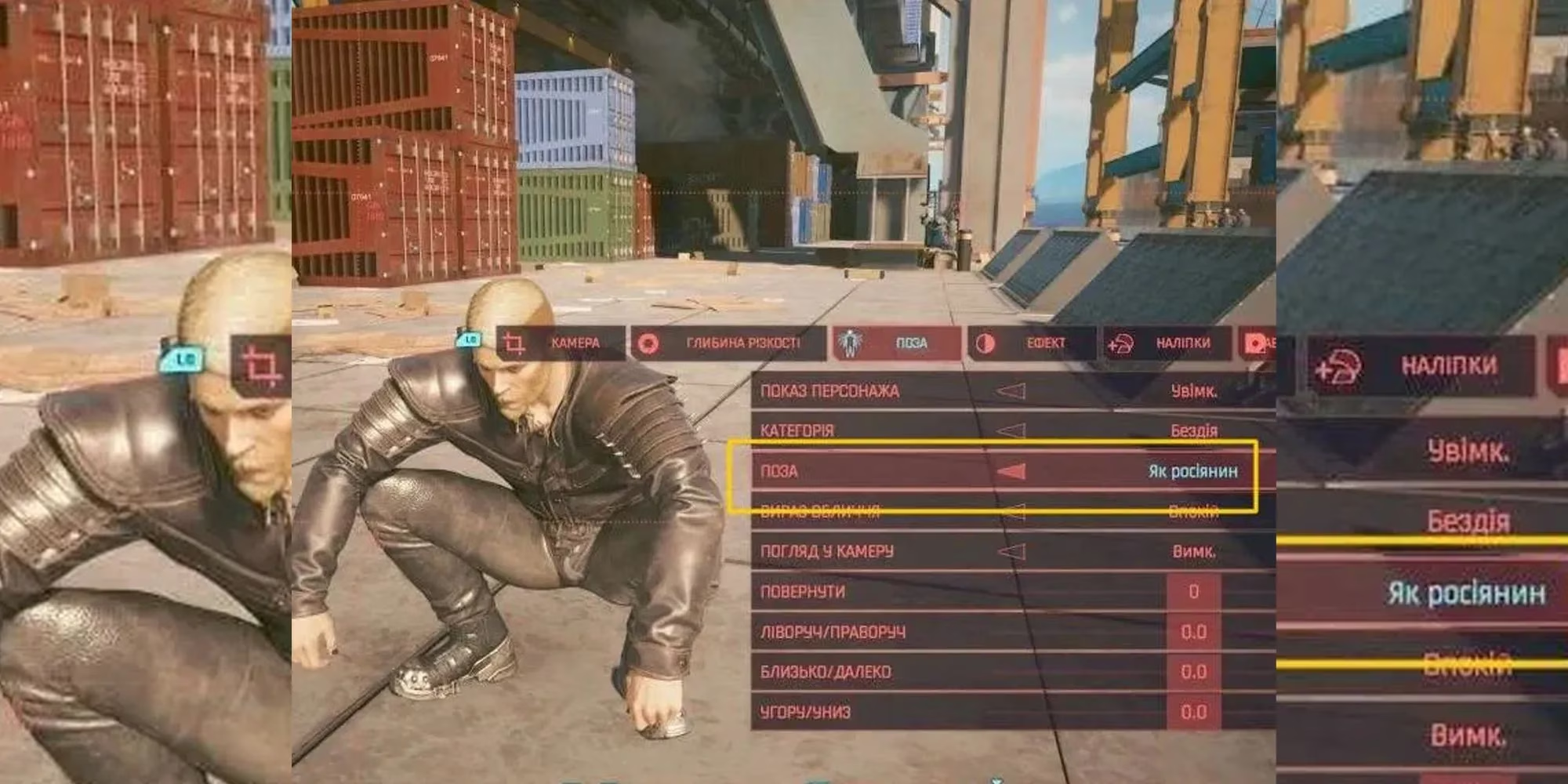
The strangest discovery waited in photo mode. Any version of the game allowed me to select a crouching character pose, but only the Ukrainian localisation labelled that pose “like a Russian.” It was a four-word punchline that transformed a neutral animation into a political gesture. I remember testing it myself and feeling the absurdity: Night City’s photo mode had briefly become a vehicle for wartime satire.
⚠️ CD Projekt Red’s Response and the 2026 Aftermath
CD Projekt Red had already been openly critical of Russia’s invasion and had donated more than $200,000 to aid civilians and refugees, so the discovery did not fit the studio’s usual public stance. Yet the company moved quickly. In a statement issued at the time, CD Projekt Red said the Ukrainian localisation contained remarks that could offend some Russian players, that those remarks were not written by its employees, and that they did not represent the studio’s views. The company apologised and promised to fix and replace them in the next update, adding that it was taking steps to ensure it would not happen again.
Now, in 2026, the patch has long since scrubbed the graffiti, reverted the pose label, and neutralised the UI. If I install the current version and switch to Ukrainian, I find ordinary localisation again. But the episode still matters because it exposed a truth about game translation that players rarely discuss. Localisation is never just a mirror; it is a set of choices made by people with their own politics, humour, and anger. A translator can leave fingerprints, and sometimes those fingerprints can turn a fictional open world into a canvas for a real one.
I still think about the way those few lines of code behaved like a smuggler’s compartment: small on the outside, enormous once opened. The controversy was not about whether the war should be represented, but about who gets to make that decision inside a commercial product. For a brief moment before the patch, Cyberpunk 2077 carried two worlds at once—Night City’s manufactured chaos and Ukraine’s real, unsanctioned grief—and the collision was impossible to ignore.
Recent analysis comes from Entertainment Software Association (ESA), and it helps frame why the Cyberpunk 2077 localisation incident matters beyond a single patch: localisation isn’t just “text,” it’s part of a commercial release that can carry reputational, consumer-trust, and regional compliance risks when third-party workflows introduce unapproved political messaging. Seen through an industry-and-policy lens, the episode underscores how publishers need clearer review gates, vendor accountability, and post-launch governance for live updates—especially when language packs can quietly alter UI labels, quest logs, or environmental storytelling in ways that audiences read as official.