In the sprawling, mud-caked realm of Kingdom Come: Deliverance 2, history is not merely a tapestry of documented events but a living memory, whispered through stone and steel. Yet, amidst the authentic clang of blacksmith hammers and the solemn prayers in chapels, a different kind of echo resonates—a playful, anachronistic whisper from other worlds. Warhorse Studios has woven a rich medieval simulation where the spirit of the past is revered, yet they have also sown it with delightful secrets, Easter eggs that wink at the player from across time and genre. It’s a testament to a simple truth in game development: the past and the future are never truly separate; they are in a constant, silent dialogue, and sometimes, that dialogue is a hilarious inside joke.
The Ghost in the Armor: Johann Silverfist
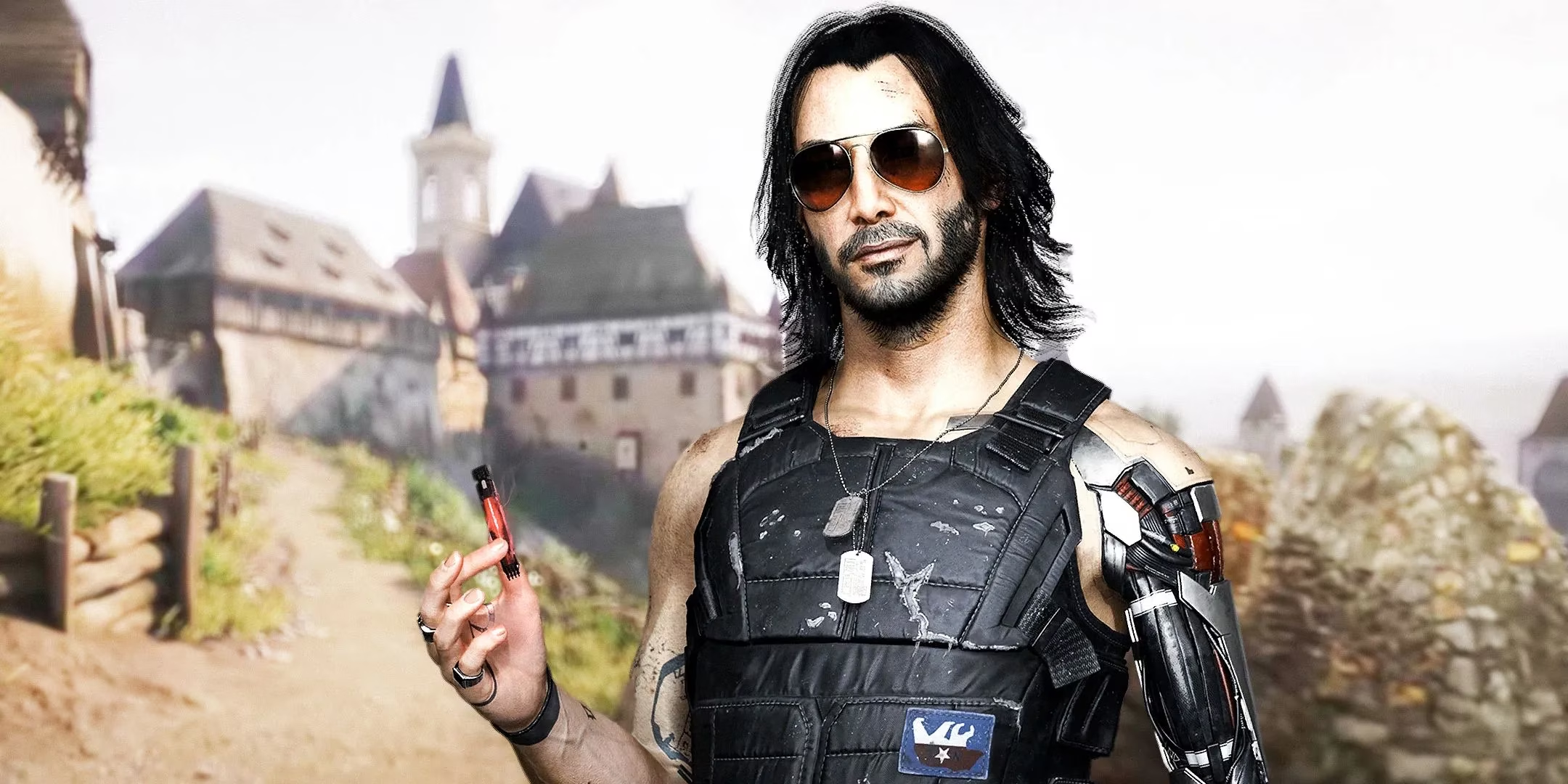
Deep within the silver-mining town of Kuttenberg, amid the clamor of merchants and the distant ring of practice swords, a figure stands with a name that sends a jolt of recognition through any modern gamer's spine: Johann Silverfist. This is no accident. The name is a brilliant, tongue-in-cheek medievalization of the legendary rockerboy terrorist, Johnny Silverhand, from CD Projekt Red's neon-drenched dystopia, Cyberpunk 2077. The reference is a masterstroke of subtlety. Where Johnny was all chrome, cynicism, and explosive guitar riffs, Johann is grounded in the gritty reality of 15th-century Bohemia. His "silver fist" likely refers to a formidable piece of plate armor or perhaps a reputation for unyielding strength, a far cry from a glowing cybernetic limb. He has no grand plans to blow up a mega-corporation—or in this case, a castle. His ambitions are decidedly more local.
A Cameo in the Lists
Players will most likely cross paths with Herr Silverfist during the Kuttenberg Tournament, a repeatable mission that lets Henry test his martial prowess. Here, Johann is simply one of the many combatants in the lists, another face in the crowd of armored hopefuls. He is not a quest-giver, nor does he spout philosophical monologues about the soul and technology. He is, in the grand scheme, a minor NPC. This makes the discovery all the more precious—a secret handshake between the developer and the player who spots it. It’s the gaming equivalent of finding a Stanley Kubrick reference in a Jane Austen adaptation; it shouldn't work, but it absolutely slaps.
A Tapestry of Pop Culture
Johann Silverfist is but one thread in a richly embroidered cloak of references that Warhorse has draped over their historical epic. The world of Kingdom Come: Deliverance 2 is a treasure trove for the culturally savvy adventurer. Players have reported findings that would make any fan's heart sing:
-
The Straw Hat Wanderer: A nod to the king of pirates, Monkey D. Luffy from One Piece, found resting on a stump or in a trader's cart. Because why shouldn't the Grand Line have a stop in Bohemia?
-
The Legendary Soloist: A grim yet hilarious sight—a corpse arranged with two swords and a pot firmly placed on its head. This is a direct tribute to Elder Ring's legendary player-hero, Let Me Solo Her, who became famous for helping others defeat the fearsome Malenia. In Bohemia, his spirit lives on, perhaps having finally met a knight he couldn't solo.
-
The Infamous Arrow Quote: A guard or a peasant might lament taking an arrow... not to the knee, but to the head. A witty subversion of the iconic Skyrim line that launched a thousand memes.
These aren't just cheap gags; they are love letters. They show a development team that is, at its core, made of gamers who speak the same cultural language as their audience. It creates a wonderful layer of meta-commentary, where the player exists both in 1403 Bohemia and in the shared digital landscape of 2026.
Bohemia: The Hottest Destination of 2026
The success of this intricate world is undeniable. Kingdom Come: Deliverance 2 has proven that being a medieval peasant is the vibe. The game sold a staggering 2 million copies in just 13 days, a feat that turned profitable for Warhorse Studios after the first million. They are, as they say in the biz, printing money, and deservedly so for crafting such a compelling, immersive experience.
So compelling, in fact, that players are actively ignoring the call of the main narrative. The first major quest instructs Henry to attend a pivotal wedding where Lord von Bergow will be present. Yet, the sandbox is so rich with activities—hunting, alchemy, swordplay, exploring for Easter eggs—that "Not Going to the Wedding" has become a community-wide meme. Players are too busy living their best medieval life, whether that's perfecting their pickpocketing skills in Sasau or searching for the next pop-culture ghost in the machine.
The Bridge Between Eras
What does it mean when Johnny Silverhand's essence is reflected in Johann Silverfist? It signifies that stories are timeless. The archetype of the rebellious, iconic figure—whether armed with a samurai's katana and a cyberarm or a knight's longsword and a gauntlet of silver—transcends setting. Warhorse hasn't just built a historical simulator; they've built a cathedral for shared gaming culture. Every discovered reference is a moment of connection, a silent "I see you" from the developers. In the end, whether you're besieging a castle in Bohemia or battling corpo overlords in Night City, the core desire is the same: to get lost in a world that feels alive, surprising, and deeply, personally resonant. And in 2026, there are few worlds as alive as this one.